
Cross-platform proteomics identifies plasma biomarkers for stroke diagnosis
Research Summary: This study identified and validated plasma protein biomarkers using cross-platform proteomics and machine learning approaches to accurately distinguish stroke subtypes and improve diagnostic precision in acute care settings.
Researcher Spotlight
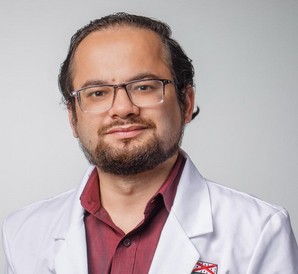
Shubham Misra is a clinical researcher working as a postdoctoral associate at Yale University. His research is focused on proteomics data analysis and biomarker discovery in stroke and neurodegenerative disorders.
LinkedIn: https://www.linkedin.com/in/dr-shubham-misra-1159a53a/
Twitter: https://x.com/Shubham_Neuro
Instagram: https://www.instagram.com/shubham_neuro/
Lab: Dr. Srikant Rangaraju, Yale University, New Haven, CT, USA
What was the core problem you aimed to solve with this research?
Timely diagnosis of stroke and its subtypes is critical to determine appropriate treatment approaches, to improve functional outcomes, and to reduce mortality. The majority of patients presenting with acute neurological symptoms to the emergency department can be broadly classified into 4 categories, namely acute ischemic stroke (AIS), intracerebral hemorrhage (ICH), transient ischemic attack (TIA), and stroke mimics (MIM). Stroke diagnosis is often challenging in the acute phase and relies mostly on advanced neuroimaging and expert clinical evaluation, which may not be immediately accessible in resource-limited settings. This can introduce delays in time-sensitive treatment decisions. Therefore, this study aimed to identify protein biomarkers in blood that can differentiate these four stroke subtypes and support early and accurate diagnosis in acute settings.
How did you go about solving this problem?
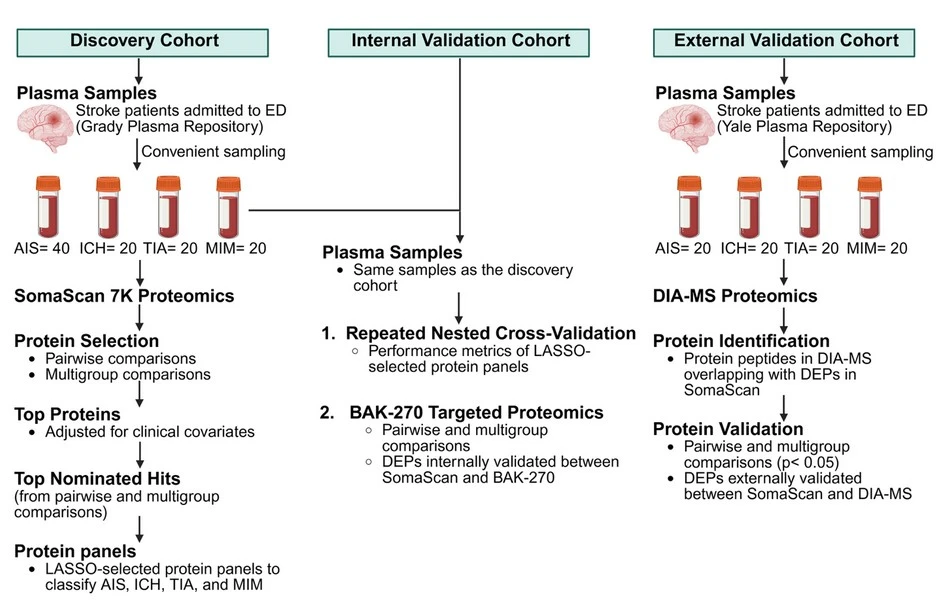
We applied high-throughput, cross-platform proteomics in a cohort of 100 patients with suspected stroke to measure thousands of plasma proteins, combined with machine learning methods such as penalized LASSO regression, Boruta, and sPLS-DA classifiers to identify discriminative biomarkers and develop protein panels for stroke subtype classification. We then internally validated these findings using repeated nested cross-validation and targeted proteomics and externally validated these findings in an independent cohort of 80 patients using untargeted mass spectrometry proteomics.
How would you explain your research outcomes (Key findings) to the non-scientific community?
We found that a small group of proteins measured from a routine blood sample can reliably help distinguish between different types of stroke. This means clinicians may be able to make faster and more accurate decisions about the type of stroke a patient is experiencing, even before advanced imaging is completed, which is critical because earlier and more targeted treatment can significantly improve patient outcomes.
Protein panels discovered in this study have important implications for improving clinical decision-making and stroke patient outcomes in emergency settings. – Dr. Srikant Rangaraju
What are the potential implications of your findings for the field and society?
Our findings highlight the potential of plasma proteomics as a valuable tool for discovering protein biomarkers of stroke diagnostic groups. We suggest that these proteomic signatures, validated through cross-platform methods, have the potential to improve stroke diagnosis, guide early intervention strategies, and reduce diagnostic uncertainty in acute settings.
What was the exciting moment during your research?
We were most excited when multiple key biomarkers remained consistent across different proteomics platforms and independent patient cohorts, confirming that our findings were robust, reproducible, and potentially translatable to real-world clinical practice.
Paper reference/citation: Misra S, Jang WE, Sanchez S, Natu A, Kumar P, Liu M, Kaur A, Lopez VT, Caglayan P, Garcia-Milian R, Watson CM, Frankel MR, Falcone GJ, Sansing LH, Rangaraju S. Cross-Platform Proteomics and Machine Learning Algorithms Nominate Plasma Biomarkers of Stroke Diagnosis. Journal of the American Heart Association. 2026 Mar 10:e048249. PMID: 41804885.https://doi.org/10.1161/JAHA.125.048249
Explore more
🎤 Career – Real career stories and job profiles of life science professionals. Discover current opportunities for students and researchers.
💼 Jobs – The latest job openings and internship alerts across academia and industry.
🛠️ Services – Regulatory support, patent filing assistance, and career consulting services.