
Career as a Data Scientist after PhD | Dr. Vivek Das Journey | Biopatrika
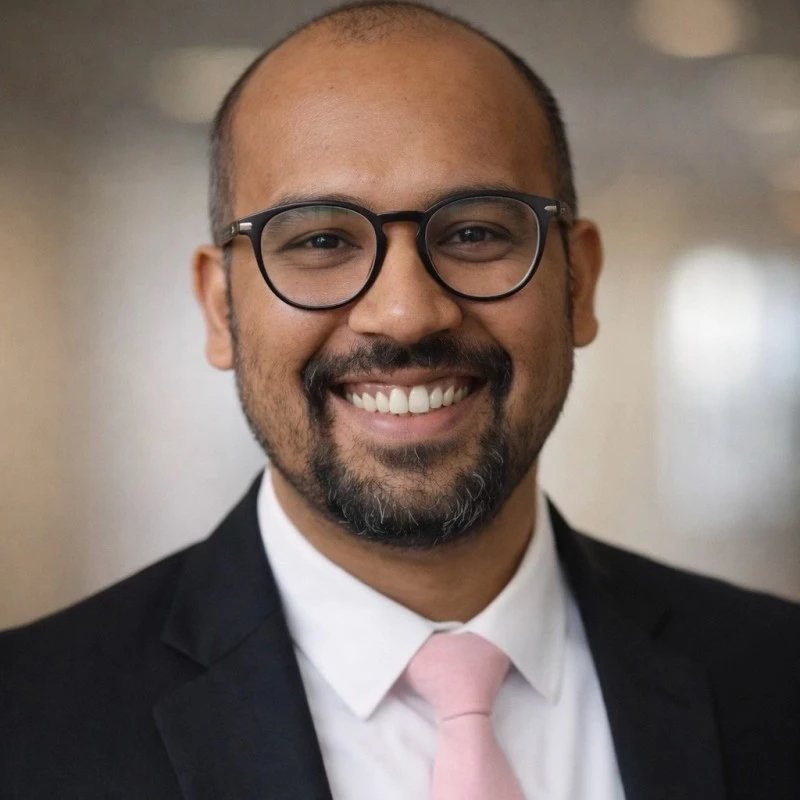
Career Konnect showcases diverse career pathways for students and professionals navigating science and technology careers. In this edition, we feature Vivek Das, PhD, Senior Research Scientist at Novo Nordisk, Denmark. With a journey spanning India, Europe, and the United States, Vivek has transitioned from mathematics and bioinformatics into data science-driven translational research. His work in systems biology and target identification highlights the growing importance of data science, AI, and machine learning in modern healthcare and drug discovery.
Career Konnect Interview
Q1. Vivek, you have had an international academic journey—from India to Italy, then the USA, and now Denmark. What motivated you to take on these challenges?
Vivek:
I am a very curious person by nature, and I have always tried to push myself to do things that are slightly uncomfortable and challenging. That curiosity has been the main driving force behind my decisions. I enjoy stepping into new environments where I can learn something different and grow both professionally and personally. Additionally, I have always loved traveling, so combining curiosity with the opportunity to explore different cultures naturally led me to pursue opportunities across various countries.
Q2. How did you discover and apply to PhD programs in Europe? Would you recommend them?
Vivek:
Initially, I was applying to PhD programs in the United States, but my GRE scores were not strong enough to secure a fully funded scholarship at that time. It was actually a friend of mine, who was already pursuing a PhD in Europe, who suggested that I explore European programs. That was when I realized there is a large and relatively underexplored academic market in Europe. Many institutions conduct annual entrance exams and recruit a significant number of students across different programs. I would definitely recommend students to explore European opportunities as well, instead of limiting themselves to the US.
Q3. What was your journey toward securing a PhD position?
Vivek:
After completing my Master’s in Mathematics in India, which included a research thesis component, I was very clear that I wanted to pursue a PhD. However, getting into a PhD program in India was quite challenging, and at the same time, I was also exploring options abroad. Since I needed financial stability, I took up a job in the IT industry, leveraging my programming background. Alongside my job, I spent evenings researching PhD opportunities, understanding application processes, and reaching out to potential labs.
This phase lasted for about six to nine months of intense learning, and nearly two years overall before I secured an opportunity. I faced multiple rejections during this time, but it was a valuable learning experience that ultimately helped me succeed.
Q4. What made you transition from academia to industry? Do you have any regrets?
Vivek:
I do not have any regrets about leaving academia. In fact, my decision was quite intentional. I always wanted to work in industrial research because I was interested in translational applications—taking scientific insights and applying them in real-world scenarios. During my PhD, I worked extensively on cancer research using human data, and towards the end, I realized that bioinformatics and data science were rapidly expanding within the industry.
My current role allows me to collaborate with leading academic institutions while working in an applied setting. So in a way, I still maintain a connection with academia while contributing to industry-driven research.
Q5. What does your current role at Novo Nordisk involve? What does a typical day look like?
Vivek:
I work in systems biology and target identification, where my primary focus is on identifying early drug targets using large-scale biological datasets. Specifically, I work in the area of chronic kidney disease. Our work involves analyzing both public and internally generated datasets to uncover potential therapeutic targets.
A typical day includes a mix of data analysis, project discussions, and collaboration. I dedicate a few hours to computational work, depending on project requirements. However, a significant portion of my day is also spent in meetings, as industry roles involve continuous coordination across teams. Additionally, I mentor Master’s students and postdoctoral researchers, which is an important part of my role. I also try to set aside some time for reading and staying updated with the latest developments in the field.
Q6. What transferable skills from your PhD helped you succeed in data science?
Vivek:
One of the most important transferable skills from my PhD was my experience working with complex biological datasets, particularly human data and multi-omics analysis. During my PhD, I worked on cancers involving solid tissues, and that experience helped me understand the complexity of biological systems.
When I transitioned into industry, I applied similar computational approaches to a different disease area—chronic kidney disease. Although the context changed, the underlying skills remained highly relevant. Another important skill I gained was persistence. A PhD teaches you how to deal with failures and uncertainties, and that mindset is extremely valuable in any career path.
Q7. How should students decide whether to pursue a PhD for a career in data science?
Vivek:
This decision really depends on an individual’s goals. For me, I knew early on that I wanted to work in bioinformatics, and pursuing a PhD was a logical step in that direction. However, not every data science role requires a PhD.
It is important for students to clearly understand their long-term goals and evaluate whether a PhD aligns with those goals. A PhD is a significant commitment, and one should pursue it only if they are genuinely interested in deep research. Having clarity, persistence, and a clear direction can make a big difference.
Q8. How important has mentorship been in your journey?
Vivek:
Mentorship has played a crucial role throughout my career. I have been fortunate to work with excellent mentors during my PhD, postdoctoral training, and even in my current role. These mentors have helped me expand my thinking, identify gaps in my understanding, and continuously improve.
They challenged me in ways that helped me grow, and at the same time, they supported me when needed. Having the right mentor can significantly influence your career trajectory and help you navigate complex decisions.
Q9. What is the difference between an academic postdoc and an industry postdoc?
Vivek:
My academic postdoc was relatively short and focused on wrapping up existing projects from my PhD. In contrast, my industry postdoc was much more structured and goal-oriented. In industry, there is a clear focus on deliverables and defined project objectives.
I was involved in target discovery projects with specific goals and timelines. This clarity helped me align my efforts and contribute effectively. While research inherently involves uncertainty, having a defined direction in industry can be very beneficial.
Q10. What advice would you give to someone aiming for a data science career in companies like Novo Nordisk?
Vivek:
One of the most important things is to actively network and connect with people in the field. Platforms like LinkedIn are extremely useful for this purpose. It is also important to stay updated on job openings, internships, and opportunities by following company pages.
Another key mindset is the ability to “learn, unlearn, and relearn.” The field of data science is constantly evolving, and being open to letting go of outdated knowledge and adapting to new concepts is essential. Reaching out to people, even if not everyone responds, is always worth the effort.
Q11. What is it like living and working in Denmark?
Vivek:
Living in Denmark has been a wonderful experience. Copenhagen is a vibrant and culturally diverse city, and the work environment is very collaborative. I work in an international team, which adds to the richness of the experience.
The climate is quite unique, with long, dark winters and bright, extended summers. It takes some adjustment, but overall, the quality of life is excellent. Professionally and personally, my time in Denmark has been very fulfilling.
Dr. Vivek Das’s journey highlights the power of curiosity, persistence, and adaptability in building a successful career in data science. His advice to “learn, unlearn, and relearn” reflects the mindset needed to thrive in today’s rapidly evolving scientific landscape.
Interested in sharing your journey?
Interested in sharing your career journey or job insights?
Check this out and fill the form today:
https://biopatrika.com/career/career-konnect/reimagining-careers-in-life-sciences-career-konnect/
Explore more
🎤 Career – Real career stories and job profiles of life science professionals. Discover current opportunities for students and researchers.
💼 Jobs – The latest job openings and internship alerts across academia and industry.
🛠️ Services – Regulatory support, patent filing assistance, and career consulting services.