
Career as a Medical Science Liaison (MSL) after PhD | Dr. Priya Mehta | Biopatrika
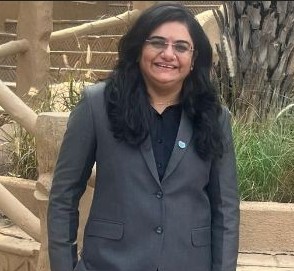
Career Konnect brings forward diverse and evolving career paths for life science professionals. In this edition, we feature Priya Mehta, a Medical Science Liaison (MSL) at Zydus Life Sciences Limited. With a strong background in medical biotechnology, cancer biology, and healthcare administration, Priya has transitioned from academia and research into a dynamic, people-centric role in medical affairs. Her journey reflects how scientific expertise, empathy, and communication can come together to create meaningful impact in patient care and the pharmaceutical industry.
Current role: Medical Affairs – Oncology Division – BU Biologics, Zydus Group
Interview
Q1. Dr. Priya, could you tell us about your academic journey and background?
Priya:
I completed my Master’s in Medical Biotechnology through an integrated program, which provided a strong foundation in the medical and biological sciences. Following that, I pursued my doctorate in cancer biology, where I gained extensive research experience in understanding molecular mechanisms, diagnostics, and therapeutics related to cancer.
In addition to my core academic training, I also pursued a postgraduate diploma in hospital and healthcare administration in collaboration with California University and a management association. I further explored rural administration through an additional course. Alongside academics, I have always been inclined toward scientific writing, reading, and engaging in activities like volunteering for animal care and exploring nature, which have shaped my overall personality.
Q2. How did your academic training and personal experiences shape your journey toward becoming an MSL?
Priya:
My academic journey played a crucial role in preparing me for this role. During my Master’s, I gained exposure through internships in both academic research institutes and the pharmaceutical industry. This helped me understand the broader application of science beyond the lab.
After completing my Master’s, I spent around two and a half years in full-time research, which strengthened my understanding of molecular biology, particularly in cancer. Later, during my PhD, my work was closely associated with hospitals, where I interacted with patients and worked on clinically relevant research.
On a personal level, my inclination toward oncology was deeply influenced by my grandmother’s experience with breast cancer. Witnessing her journey and the challenges faced by patients made me more empathetic and motivated me to contribute to this field. Additionally, during my doctoral research, I worked with patients from rural backgrounds, which gave me a real-world perspective on healthcare challenges. These experiences collectively helped me develop both scientific understanding and empathy—two key aspects of the MSL role.
Q3. What skills are important for succeeding as a Medical Science Liaison?
Priya:
Communication and interpersonal skills are extremely important in this role. During my academic years, I was exposed to personality development sessions that focused on verbal and non-verbal communication, presentation skills, and professional interaction. These skills proved to be very valuable later in my career.
Participating in conferences, workshops, and scientific presentations also helped me overcome stage fear and improved my ability to communicate effectively within limited timeframes. In addition to these skills, transitioning into this role required me to continuously update myself with the latest scientific developments, including clinical trials, drug mechanisms, diagnostics, and real-world data.
The ability to constantly learn, unlearn, and relearn is essential in this field.
Q4. What advice would you give to someone preparing for an MSL role or interview?
Priya:
For anyone interested in entering medical affairs, the first and most important requirement is strong communication and interpersonal skills, as you will be interacting regularly with clinicians, healthcare professionals, and internal teams.
Secondly, one must stay updated with the latest scientific and clinical knowledge. It is important to thoroughly understand the drugs or molecules you are working with, including their clinical data and real-world applications.
Additionally, presentation and scientific writing skills are crucial, as the role involves educating key opinion leaders and supporting scientific discussions. Preparing well in these areas can significantly improve your chances of success.
Q5. How was your interview experience when transitioning into this role?
Priya:
The interview process was quite rigorous and involved multiple stages. Initially, I had a telephonic interview that lasted around one to one and a half hours. This was followed by a virtual interview, where I was assessed on my academic background, subject knowledge, and my motivation for transitioning from academia to industry.
One of the key aspects was justifying this transition—explaining why I wanted to move from a research and academic background into a corporate role and how I would fit into it.
I was also asked to prepare and deliver a presentation on a specific drug molecule. This stage was similar to a viva, where my understanding and analytical skills were tested. Finally, there was a personal interview, after which I was selected. Overall, the process was comprehensive and evaluated both technical knowledge and soft skills.
Q6. How was your transition from academia to the corporate environment?
Priya:
The transition was quite challenging initially. Moving from an academic or research environment to a corporate setup involves adapting to a completely different work culture.
On my first day, I felt both excited and nervous. The corporate environment, the scale of operations, and the expectations were very different from what I was used to. I had to learn new things quickly, adapt to the workflow, and align myself with organizational goals.
However, over time, I became more comfortable and confident in my role. It was a process of continuous learning and adaptation.
Q7. What does a typical day in your role as an MSL look like?
Priya:
My daily work involves a mix of scientific, clinical, and communication-based activities. A significant part of my role is interacting with clinicians, both virtually and in person, to understand their perspectives and gather insights about our products.
I also provide scientific support to key opinion leaders, helping them understand the clinical applications of our products. In addition, I am involved in training internal teams and paramedical staff in hospitals and medical institutions.
Another important aspect of my role is working on projects related to real-world evidence and data collection for specific drug molecules. Overall, my day is dynamic and involves continuous interaction, learning, and collaboration.
Q8. What final advice would you give to students or researchers considering this career path?
Priya:
My biggest advice is to follow your passion rather than simply following conventional career paths. Many people tend to follow a predefined route—PhD, postdoc, academia—but there are numerous opportunities beyond that.
It is important to understand your interests and make decisions accordingly. Your passion will ultimately determine your growth, satisfaction, and success in your career.
Additionally, choosing your PhD topic wisely is crucial, as it often shapes your future career path. While transitioning later is possible, it can be challenging, so it is better to make informed decisions early on.
Most importantly, believe in your choices and stay open to exploring opportunities beyond traditional roles.
Dr. Priya Mehta’s journey highlights how a combination of scientific expertise, empathy, and communication can lead to impactful careers in medical affairs. Her story reinforces the idea that there are diverse opportunities beyond academia for those willing to explore and follow their passion.
Interested in sharing your journey?
Interested in sharing your career journey or job insights?
Check this out and fill the form today:
https://biopatrika.com/career/career-konnect/reimagining-careers-in-life-sciences-career-konnect/
Explore more
🎤 Career – Real career stories and job profiles of life science professionals. Discover current opportunities for students and researchers.
💼 Jobs – The latest job openings and internship alerts across academia and industry.
🛠️ Services – Regulatory support, patent filing assistance, and career consulting services.