
Career as a Scientific Editor after PhD | Dr. Parichita Shah | Biopatrika
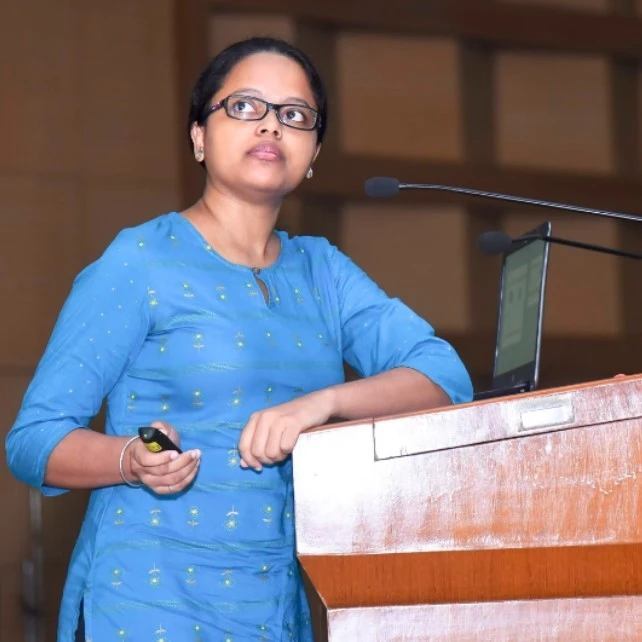
Career Konnect brings forward diverse career journeys that go beyond traditional academic roles. In this edition, we feature Dr. Parichita Shah, an Editor at Cactus Communications. With a strong background in chemistry and a PhD from IIT Bombay, Parichita transitioned into scientific editing—helping researchers communicate their work effectively for publication. Her journey highlights how writing, editing, and scientific expertise can come together to build a rewarding career in the publishing and science communication industry.
Current Position: Scientific Editor, Elsevier
Career Konnect Interview
Q1. Dr. Parichita, could you walk us through your academic journey and transition into scientific editing?
Parichita:
I completed my Bachelor’s in Chemistry from St. Xavier’s College, Kolkata, followed by a Master’s in Chemistry from the University of Hyderabad. After that, I pursued my PhD at the Indian Institute of Technology (IIT) Bombay, where I worked on synthetic ion transporters. My research involved synthesizing molecules and studying their ability to transport ions across lipid bilayers.
After completing my PhD in 2020, I decided to explore opportunities beyond traditional research roles. I transitioned into the writing and editing industry and joined Cactus Communications as an editor on a contractual basis. Over time, I gained experience in manuscript editing and also began freelancing for other organizations. This journey has allowed me to combine my scientific background with my interest in writing and communication.
Q2. What skills from your PhD helped you succeed as a scientific editor?
Parichita:
The skills developed during a PhD are highly relevant to this role. During my doctoral studies, I was involved in writing research papers, preparing reports, and presenting my work at conferences. These experiences helped me develop strong writing and communication skills.
Additionally, a PhD trains you to critically analyze scientific literature and understand complex concepts, which is essential for editing manuscripts. The ability to interpret scientific data and ensure clarity and accuracy in writing is a key part of this job. Overall, the scientific training and communication skills acquired during a PhD play a crucial role in this career.
Q3. What was the application and interview process like for this role?
Parichita:
The application process was quite structured and typically involved multiple stages. The first step was an MCQ-based test designed to assess proficiency in the English language. Once that was cleared, I was given a short scientific passage to edit, which tested my ability to handle scientific manuscripts and ensure proper language and formatting.
In some cases, there was also an additional round involving an HR interview or a discussion with a managing editor. Overall, the process was transparent and focused on evaluating both language skills and scientific understanding.
Q4. What does a typical day in your role look like?
Parichita:
As a full-time editor, my work involves reviewing and editing multiple manuscripts each day. On average, I work around nine to ten hours daily, depending on the workload. Typically, I handle two to three manuscripts per day, which can amount to editing around 3000 to 6000 words.
The work requires sustained focus and attention to detail. In addition to editing, I also communicate with team members, attend meetings, and collaborate with managing editors. While the role can be demanding, it also offers flexibility in terms of work timings once you are comfortable with the workflow.
Q5. What are the key skills required to succeed as a scientific editor?
Parichita:
Time management is one of the most critical skills in this role, as you need to handle a significant volume of work within tight deadlines. The ability to stay focused and avoid procrastination is equally important.
Strong communication skills are essential, as the role involves helping authors refine their manuscripts for publication. You must be able to understand their work and present it clearly and accurately.
Another important aspect is adaptability. As an editor, you may receive manuscripts from various scientific domains, so being open to learning and understanding new topics is crucial.
Q6. What advice would you give to someone considering this career path?
Parichita:
The first step is to assess whether you are genuinely interested in editing. This role involves long hours of focused work, which can be quite different from the dynamic environment of a laboratory.
During your PhD, try to read research papers from a wide range of fields, not just your area of specialization. This will help you develop a broader understanding of different scientific concepts, which is essential for this role.
Additionally, improving your writing skills and becoming efficient in preparing manuscripts can give you a strong advantage. The more experience you gain in writing and editing during your PhD, the smoother your transition into this field will be.
Q7. What is the best way to secure opportunities in this field?
Parichita:
The process is quite straightforward and transparent. Most companies list their job openings on their official career pages, and applicants can apply directly.
Once you apply, you typically need to go through the assessment process, which evaluates your language and editing skills. Clearing these steps is usually sufficient to secure a position, even without strong professional connections.
Q8. How important is mentorship in this career?
Parichita:
Mentorship plays a significant role in shaping your career. During my PhD, my advisor helped me improve my writing and presentation skills, which proved invaluable later.
After entering the industry, having supportive mentors and team members made it easier to adapt to the workload and expectations. While it is possible to succeed without mentorship, having guidance can make the journey smoother and more efficient.
Q9. Looking back, would you choose the same career path again?
Parichita:
I am quite happy with the path I have chosen and would not change it. However, if I had known earlier that I would enter this field, I might have taken additional courses to further enhance my writing and editing skills.
There are also related areas, such as medical writing, where specialized training can be beneficial. Preparing for these opportunities earlier could provide even more career options.
Q10. How do you maintain work-life balance?
Parichita:
Despite the demanding nature of the job, the flexibility in work timings allows me to pursue my interests. I enjoy dancing and make it a point to take time out for it regularly.
Maintaining a balance between work and personal interests is important, and this role allows for that flexibility once you establish a routine.
Closing Note
Dr. Parichita Shah’s journey demonstrates how strong writing skills, scientific understanding, and adaptability can open doors to careers in scientific editing. Her story highlights the growing demand for professionals who can effectively communicate scientific research and support the global scientific publishing ecosystem.
Interested in sharing your journey?
Interested in sharing your career journey or job insights?
Check this out and fill the form today:
https://biopatrika.com/career/career-konnect/reimagining-careers-in-life-sciences-career-konnect/
Explore more
🎤 Career – Real career stories and job profiles of life science professionals. Discover current opportunities for students and researchers.
💼 Jobs – The latest job openings and internship alerts across academia and industry.
🛠️ Services – Regulatory support, patent filing assistance, and career consulting services.