
Career in Science Communication & Outreach | Nimisha Roy Journey | Biopatrika
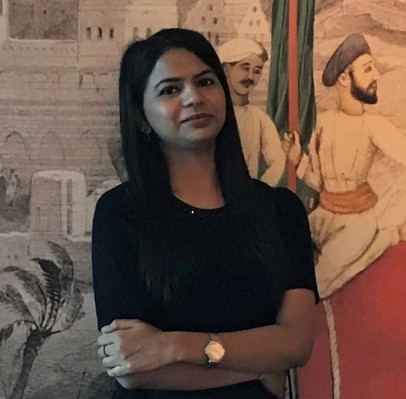
Career Konnect is an initiative that highlights diverse career pathways for students and early-career professionals, especially in life sciences. In this edition, we feature Nimisha Roy, who transitioned from a PhD in Biomedical Engineering to a role in Science Communication and Outreach. With experience as a Communication Coordinator at INSTEM (Institute for Stem Cell Science and Regenerative Medicine), Nimisha represents a growing career path where science meets storytelling, public engagement, and impact.
Current role: Consultant, Regional Centre for Biotechnology
Interview
Q1. Nimisha, could you tell us about your academic journey?
Nimisha:
I was born and brought up in Prayagraj, Uttar Pradesh. I completed my schooling at YMCA Centenary School and College, Allahabad. After that, I pursued a five-year integrated B.Tech + M.Tech in Biomedical Engineering from the Indian Institute of Information Technology (IIIT), Allahabad. I then continued at the same institute for my PhD, also in Biomedical Engineering.
I have recently completed my PhD, and my first professional role was as a Communication Coordinator at INSTEM. Alongside my academic journey, I have always been deeply interested in science communication and outreach activities.
Q2. How was the PhD admission and screening process at your institute?
Nimisha:
To pursue a PhD in engineering institutes, qualifying exams like GATE are typically required. Since Biomedical Engineering does not fall under CSIR-NET, I appeared for GATE.
The selection process involved:
- A written test
- Followed by an interview (usually two rounds)
If you qualify for the written test, you are invited for the interview, where a panel consisting of internal and external faculty members evaluates you. They assess your understanding of basic concepts, your research aptitude, and how suitable you are for a lab environment.
It is not extremely difficult, but they aim to gauge your conceptual clarity and readiness for research.
Q3. How was your experience at INSTEM? What was the interview and work life like?
Nimisha:
I feel very fortunate to have been part of INSTEM, which is India’s first stem cell research institute and highly reputed.
The application process included:
- Applying through an online job posting
- Completing an assignment: preparing a presentation on INSTEM’s COVID-related activities
This assignment tested how well we could research and present information. I explored multiple sources such as websites, YouTube, and news articles. Since the role was in science communication, I incorporated creative elements like cartoons and illustrations to make the presentation engaging.
After that:
- The first interview evaluated creativity and presentation skills
- The second round focused on personality, teamwork, and individual traits
- The final round involved senior leadership (Dean, Director, and Communications Head), where questions focused on INSTEM’s vision, objectives, and the importance of science communication
The work environment was dynamic and enriching. Every day brought new challenges and opportunities to learn.
Q4. How was the transition from academic life to a professional role in communication and outreach?
Nimisha:
This transition was quite personal for me. During my PhD, I realized that my personality was different from that of a conventional researcher. I enjoy interacting with people, discussing ideas, and communicating—whereas research often involves long hours of isolated work.
After about two years into my PhD, I began to feel overwhelmed. I discussed this with my mentor, who was very supportive. A key turning point was when a senior professor pointed out that I had a natural ability to explain complex ideas simply—an essential skill in science communication.
Around the same time, I discovered the Awsar Award, a popular science writing competition by the Department of Science and Technology. I participated, wrote about my research in simple language, and won the award. This boosted my confidence.
I then:
- Started writing blogs
- Created my own blog
- Did freelance writing for commercial platforms
Gradually, I realized that science communication was something I truly enjoyed. After submitting my thesis, I applied for roles in this field and eventually joined INSTEM.
Q5. How important was mentorship in your journey?
Nimisha:
Mentorship played a crucial role in my journey. My PhD supervisor was very supportive and never forced me to stay in a path that did not make me happy. Instead, he encouraged me to explore what truly suited me.
Additionally, senior mentors like Professor Krishna Mishra guided and inspired me. Seeing women scientists actively involved in science communication also motivated me greatly.
Having the right mentors can truly shape your career decisions and give you the confidence to pursue unconventional paths.
Q6. What skills from your PhD helped you in your communication and outreach role?
Nimisha:
A PhD equips you with several transferable skills:
- Resilience: Handling failures, such as rejected papers or unsuccessful experiments, builds mental strength
- Teamwork: Working in lab groups teaches collaboration and adaptability
- Integrity: Being honest and ethical in your work is essential
These skills are invaluable in any career, including science communication.
Q7. What was your role at INSTEM as a Communication and Outreach Coordinator?
Nimisha:
I was heading the communications office, and my responsibilities included:
- Organizing visits for school and college students
- Conducting lectures, competitions, and outreach programs
- Hosting panel discussions (e.g., International Day of Women and Girls in Science)
- Managing scientific events and public engagement activities
- Writing monthly reports for the government
We were a small team of two, so we shared responsibilities and managed multiple activities simultaneously. Every day brought something new and exciting.
Q8. What advice would you give to students or researchers starting their PhD?
Nimisha:
My advice is simple:
Do what makes you happy and pursue it with full confidence.
There will be phases during a PhD when things feel overwhelming—failed experiments, delays, or uncertainty about the future. It is important to stay calm and not take things too seriously.
Mental well-being is very important. I strongly feel there should be more emphasis on stress management and mental health during PhD programs.
If you stay happy and composed, you will make better decisions and eventually find the right path.
Q9. What are your hobbies outside of work?
Nimisha:
I love traveling and try to explore new places whenever possible. India’s diversity fascinates me—every region has its own culture and cuisine.
I also enjoy baking cakes and cookies. Having hobbies is very important as they help you relax and recharge.
Q10. How important is science communication in today’s world?
Nimisha:
Science communication is extremely important.
Even if you continue in research, you must be able to explain your work in simple terms. This is essential for:
- Public understanding
- Securing funding
- Demonstrating societal impact
Funding agencies and policymakers may not have a scientific background, so communicating your research clearly is crucial.
Science communication helps bridge the gap between researchers and society, ensuring that scientific work reaches and benefits the public.
Explore more
🎤 Career – Real career stories and job profiles of life science professionals. Discover current opportunities for students and researchers.
💼 Jobs – The latest job openings and internship alerts across academia and industry.
🛠️ Services – Regulatory support, patent filing assistance, and career consulting services.