
AI Scientist Writes Its Own Research Papers: A New Era for Scientific Discovery
For centuries, science has been a deeply human endeavor—driven by curiosity, experimentation, and rigorous validation. But a new study published in Nature (2026) suggests that this may be changing faster than expected. Researchers have developed an advanced system called the “AI Scientist”, capable of performing the entire research process—from generating ideas to writing and even reviewing scientific papers—without human intervention.
At its core, the AI Scientist is not just a tool, but a complete research pipeline. It can propose novel hypotheses, write code, run experiments, analyze data, generate figures, draft manuscripts, and even conduct its own peer review. In a striking demonstration of its capabilities, a paper generated entirely by this system successfully passed the first round of peer review at a workshop of a major machine learning conference. While workshops generally have higher acceptance rates than flagship conferences, the achievement still marks a significant milestone: AI is no longer just assisting science—it is beginning to do science.
The system works by combining powerful modern AI models with a coordinated network of “agents” that handle different stages of research. In one mode, the AI builds on existing code templates to explore specific problems. In another, more open-ended mode, it independently searches for new research directions, tests ideas, and evaluates results. This flexibility allows it to produce a wide range of scientific outputs with minimal human input.
However, the researchers are careful to emphasize that the system is far from perfect. The AI Scientist still struggles with issues familiar to anyone who has used advanced AI tools—such as generating shallow ideas, making implementation errors, or producing inaccurate citations. It can also be overconfident in its conclusions, a problem known as “hallucination.” In its current form, it does not yet match the depth, rigor, or originality of top-tier human research, nor can it consistently produce high-quality work.
Despite these limitations, the trajectory is clear. Advances in computing power, data availability, and AI architecture are rapidly expanding what such systems can do. Recent studies suggest that the complexity of tasks AI can reliably complete is doubling every few months. If this trend continues, today’s limitations may soon be overcome, raising the possibility that AI could eventually rival—or even surpass—human researchers in certain domains.
The implications are profound. On one hand, fully or partially automated research could dramatically accelerate scientific discovery, helping solve complex problems in fields ranging from medicine to climate science. On the other hand, it raises serious concerns. A flood of AI-generated papers could overwhelm already strained peer-review systems, blur the line between genuine and automated contributions, and challenge existing norms around authorship, credit, and scientific integrity.
For now, the researchers have taken a cautious approach. All AI-generated submissions in their study were withdrawn after peer review, ensuring that the experiment did not disrupt the scientific record. They stress that clear guidelines and ethical standards must be developed before such systems are widely adopted.
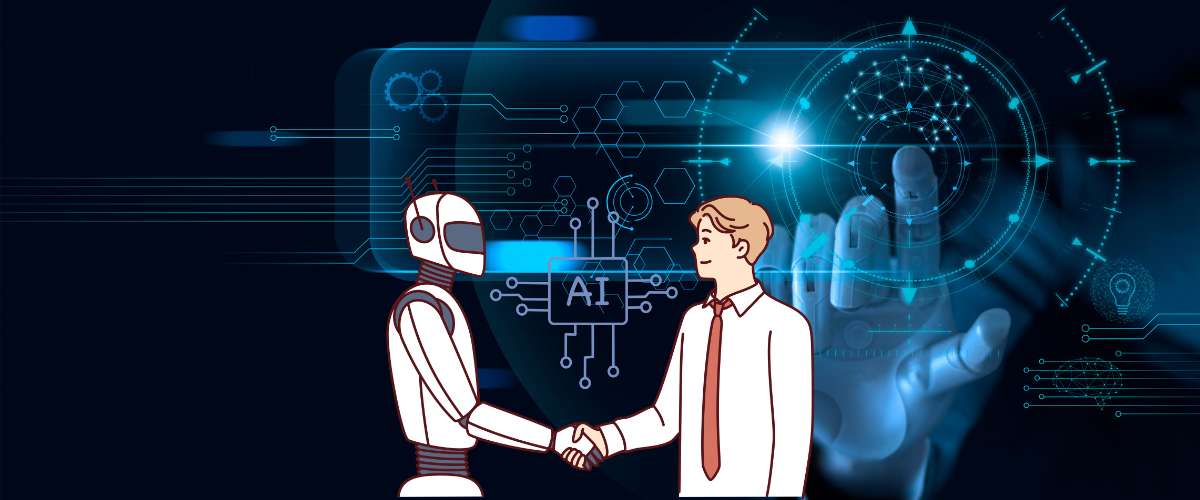
What makes this moment particularly significant is not just what the AI Scientist can do today, but what it represents for the future. Science may be entering a new phase—one where discovery is no longer solely a human pursuit, but a collaboration between human insight and machine intelligence. If developed responsibly, such systems could usher in an era where the pace of innovation accelerates dramatically, redefining how knowledge itself is created.
Source: https://www.nature.com/articles/s41586-026-10265-5
Explore more
🎤 Career – Real career stories and job profiles of life science professionals. Discover current opportunities for students and researchers.
💼 Jobs – The latest job openings and internship alerts across academia and industry.
🛠️ Services – Regulatory support, patent filing assistance, and career consulting services.