
Career as an Entrepreneur after PhD | Shrishti Singh Journey | Biopatrika
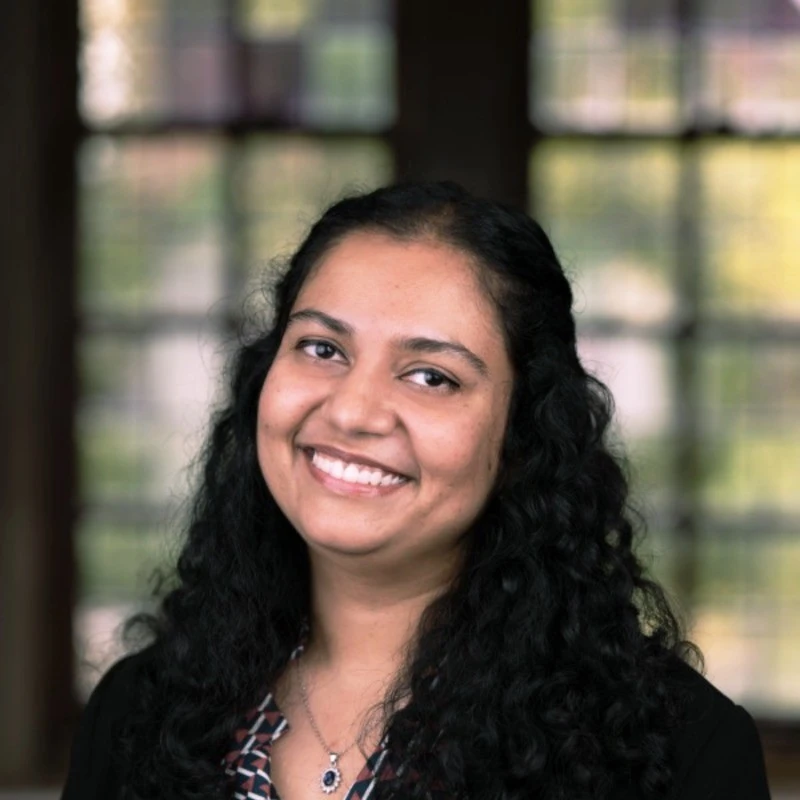
Career Konnect highlights inspiring journeys of individuals who have carved unique career paths in science and beyond. In this edition, we feature Dr. Shrishti Singh, a Biomedical Engineer turned entrepreneur based in the United States. From Bangalore to George Mason University, her journey reflects perseverance, innovation, and the courage to translate research into real-world impact. Her work on developing novel imaging contrast agents and her transition toward building a startup exemplify how scientific ideas can evolve into impactful ventures.
Current role: Licensing/Innovation Fellow in Life Sciences, University of Michigan Innovation Partnerships Office, USA
Career Konnect Interview
Q1. Shrishti, could you tell us about your academic journey?
Shrishti:
My name is Shrishti Singh, and I recently completed my PhD in Biomedical Engineering from George Mason University in Virginia, USA. I did my Bachelor’s in Engineering from R.V. College of Engineering in Bangalore. After that, I moved to the United States for my Master’s, which was fully funded, and then continued into my PhD. During my doctoral research, I worked on developing a novel contrast agent for imaging tumors, especially for early detection and deeper tissue imaging.
Q2. What inspired you to move from Bangalore to the United States and pursue such an ambitious academic path?
Shrishti:
This goes back to my teenage years when my mother was hospitalized. I remember asking doctors how I could help save lives. They told me I could either become a physician or an engineer who builds technologies that help doctors. That conversation stayed with me.
Initially, I tried to pursue medicine, but eventually realized engineering was a better fit for me. I was always drawn to creating technologies that could have a real impact on people’s lives. During my undergraduate studies, I developed a strong interest in research, especially in areas where scientific discoveries could be translated into practical applications. My undergraduate project received recognition from IISc, which helped me secure opportunities for my Master’s and eventually led me to pursue a PhD.
Q3. Moving abroad can be challenging. Did you face any difficulties transitioning to life in the US, especially as a student and as a woman in science?
Shrishti:
Yes, the transition was definitely challenging. Moving away from family is never easy, especially when you are so used to having that support system around you. As an international student, you suddenly have to manage everything on your own—cooking, cleaning, finances, and academics. There is a steep learning curve.
On top of that, being a woman in science comes with its own set of challenges. There were moments of self-doubt, loneliness, and pressure. However, over time, you learn to adapt and become stronger. I had a supportive group of friends and mentors, and my family was always there for me emotionally, even if not physically. It is difficult, but it is absolutely manageable, and it shapes you into a more resilient person.
Q4. How did you manage the emotional conflict between family and career?
Shrishti:
I have faced that conflict many times. Being away from family, especially from my mother, was very difficult. There were moments when I questioned whether I was making the right choice by staying away and focusing on my career.
However, my mother has been my biggest support system. She constantly reassures me and reminds me how proud she is. I am the first person in my family to earn a doctorate, and that gives her immense happiness. I also had strong mentorship from my advisor, who himself was an immigrant and understood these struggles. Talking openly about my doubts with my mentors and family helped me navigate these emotional challenges.
Q5. What motivated you to choose your specific research area in biomedical engineering?
Shrishti:
When I started my PhD, I was very clear about one thing—I did not want to work on a project that would just end up as a thesis. I wanted to create something that had real potential to reach the clinic and make a difference.
I had detailed discussions with my advisor about this. Together, we identified a gap in medical imaging, particularly in contrast agents. With input from physicians, we realized there was a strong need for better imaging tools for early tumor detection.
What started as an idea turned into a full-fledged project. Over four years, I worked on designing, synthesizing, and testing this contrast agent. There were periods of intense struggle—I remember failing the same experiment repeatedly for four months—but I believed in the potential of the work. That belief kept me going.
Q6. You are now transitioning toward entrepreneurship. How did that decision come about?
Shrishti:
As my research progressed, it became clear that this was not just an academic project—it had real-world potential. I wanted to take it beyond the lab and into clinical applications.
I applied for and received funding from the Virginia state government to pursue a unique postdoctoral fellowship. This fellowship is focused not just on research, but on building a company around my technology. My goal is to take this product through further preclinical testing and eventually into the market.
Entrepreneurship felt like the natural next step because I wanted to see this innovation actually help patients.
Q7. What were some of the biggest challenges during your PhD journey?
Shrishti:
One of the biggest challenges was dealing with repeated failures. Research is unpredictable, and there were times when experiments failed continuously despite putting in long hours. It can be mentally exhausting.
However, those failures taught me resilience and patience. Over time, I learned to approach problems differently, stay consistent, and keep improving. Support from my mentors and team also played a huge role in helping me push through difficult phases.
Q8. What advice would you give to students, especially those who want to pursue research or entrepreneurship but lack support?
Shrishti:
First, learn to listen to yourself rather than being overly influenced by others’ opinions. It may take time, but eventually you will understand what truly matters to you.
Second, take chances. If I had not reached out to professors or applied for opportunities that seemed out of reach, I would not be where I am today. Sometimes, you just have to take that first step.
Third, do not be afraid of failure. Failure is not the end—it is a learning process. Every failure teaches you something valuable.
Lastly, never compare yourself to others. Everyone’s journey is different. Success comes from consistent effort, practice, and patience. Focus on your own growth rather than measuring yourself against others.
Dr. Shrishti Singh’s journey is a powerful example of how courage, persistence, and clarity of purpose can transform a scientific idea into a real-world solution. Her transition from research to entrepreneurship highlights the growing importance of translating science into impact.
Explore more
🎤 Career – Real career stories and job profiles of life science professionals. Discover current opportunities for students and researchers.
💼 Jobs – The latest job openings and internship alerts across academia and industry.
🛠️ Services – Regulatory support, patent filing assistance, and career consulting services.