
Engineered SimCells Show Promise in Targeted Antimicrobial Therapy Against Drug-Resistant Bacteria
In a major advance against antimicrobial resistance (AMR), researchers have developed programmable, nonreplicating bacterial “SimCells” capable of selectively targeting and killing harmful pathogens—offering a potential new class of precision antimicrobials.
Antimicrobial resistance remains one of the most pressing global health threats, responsible for millions of deaths annually. Traditional antibiotics, while effective, often lack specificity—killing beneficial microbes alongside harmful ones and accelerating resistance. The newly reported study proposes an innovative solution: reprogrammed bacterial cells designed to act as targeted therapeutic agents.
What Are SimCells?
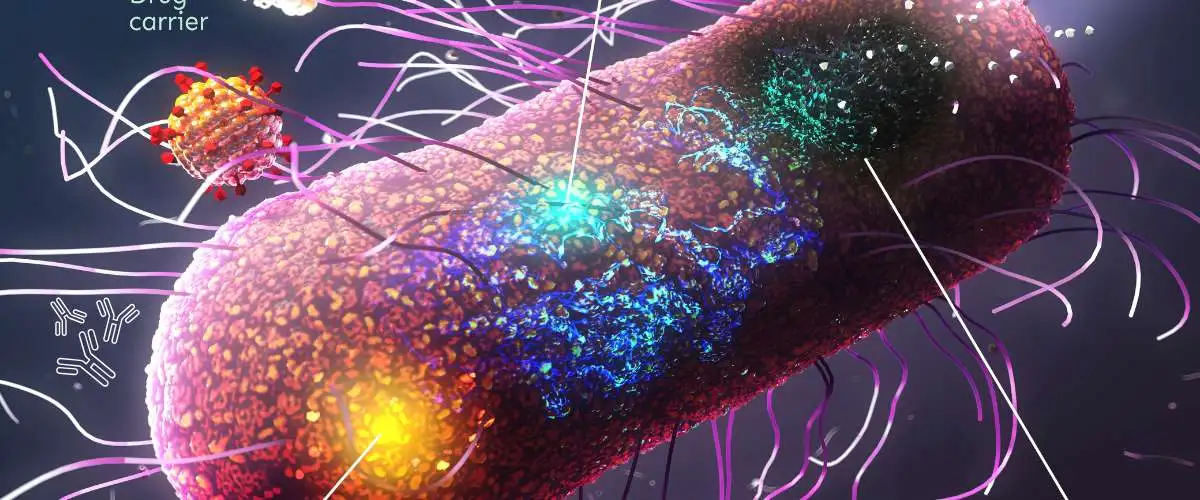
The research introduces two engineered systems—SimCells (1–2 µm) and mini-SimCells (100–400 nm)—which are essentially chromosome-free, nonreplicating bacterial cells. Unlike conventional bacteria, these cells cannot divide, making them inherently safer for therapeutic use.
Despite lacking chromosomes, SimCells retain essential cellular machinery, allowing them to perform specific, pre-programmed functions. Scientists describe them as “smart bioparticles”—customizable tools that can be engineered to recognize and eliminate specific pathogens with high precision.
Precision Targeting Using Nanobodies
A key innovation lies in the use of surface-displayed nanobodies—small antibody-like molecules that enable SimCells to selectively bind to target bacteria.
In this study, the system was designed to recognize outer membrane proteins of Escherichia coli, including clinically relevant multidrug-resistant strains. This targeted binding ensures that SimCells interact closely with harmful bacteria, minimizing unintended effects on beneficial microbial communities.
Dual Killing Mechanism
Once attached to the target pathogen, SimCells deploy a two-pronged antimicrobial strategy:
- Direct Injection of Toxic Proteins: Using a bacterial Type VI secretion system (T6SS), SimCells deliver toxic effectors directly into the pathogen’s cytoplasm—akin to a microscopic “nano-needle” attack.
- Localized Chemical Attack: Engineered enzymes convert aspirin into compounds that generate hydrogen peroxide, creating a localized antimicrobial environment around the pathogen.
This combination of immediate and sustained attack significantly enhances bacterial killing efficiency.
High Efficiency, Minimal Collateral Damage
Experimental results are striking. Mini-SimCells eliminated over 97% of targeted drug-resistant E. coli within 48 hours. In complex microbial environments, repeated dosing achieved a 103-fold reduction in target bacteria while largely sparing non-target species.
Such specificity represents a major advantage over broad-spectrum antibiotics, which often disrupt the entire microbiome.
Safety and Clinical Potential
Because SimCells are nonreplicating, their risk of uncontrolled proliferation is extremely low, meeting stringent safety guidelines. Similar minicell-based therapies have already shown promise in early clinical studies, including human trials.
The modular nature of this platform means it can be adapted to target a wide range of pathogens, potentially extending beyond bacterial infections to applications in cancer therapy.
A New Paradigm in Antimicrobial Therapy
The development of SimCells represents a shift from traditional antibiotics to programmable, precision-based therapeutics. By combining biological engineering with targeted delivery systems, researchers are moving toward treatments that are both effective and microbiome-friendly.
As antimicrobial resistance continues to rise, such innovations could play a crucial role in shaping the next generation of therapies.
Looking Ahead
While further studies and clinical validation are needed, the findings offer a promising glimpse into the future of infection control—where treatments are not only potent but also precisely targeted.
In the fight against superbugs, smart cells may soon become one of the most powerful tools in modern medicine.
Source: Proceedings of the National Academy of Sciences (PNAS)
Explore more
🎤 Career – Real career stories and job profiles of life science professionals. Discover current opportunities for students and researchers.
💼 Jobs – The latest job openings and internship alerts across academia and industry.
🛠️ Services – Regulatory support, patent filing assistance, and career consulting services.