
Human DNA Virome Study Reveals How Genes and Environment Shape Viral Load and Disease Risk
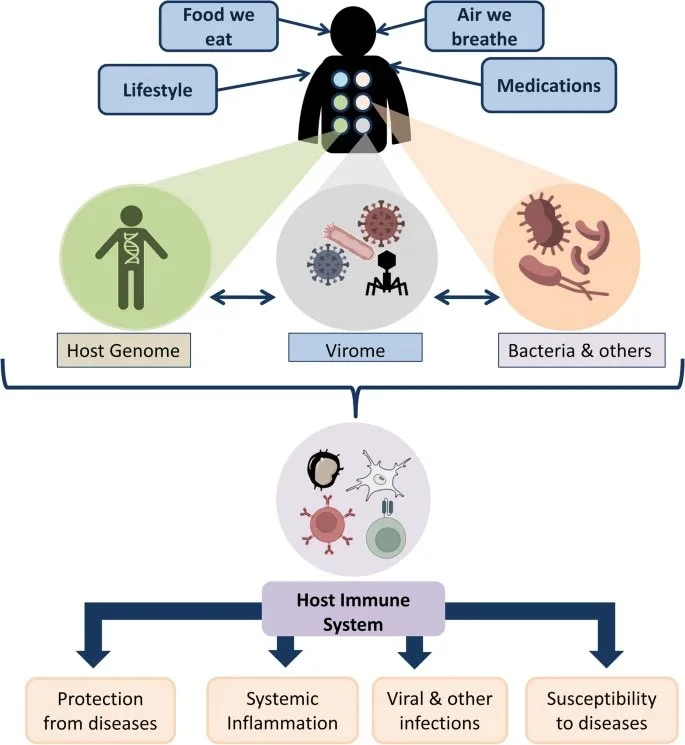
A massive global study has revealed that the viruses quietly living inside the human body—collectively known as the DNA virome—are not random passengers, but are shaped by our genes, lifestyle, and environment.
Published in Nature (2026), the research analyzed viral DNA from over 900,000 individuals across major biobanks, uncovering how human biology and external factors influence lifelong viral presence and disease risk.
A Lifetime Relationship with Viruses
Many viruses infect humans early in life and persist indefinitely, often without causing symptoms. However, their abundance—referred to as viral load—can fluctuate, influencing whether they remain harmless or contribute to disease.
By examining 31 common DNA viruses in blood and saliva samples, researchers found that viral load varies significantly with:
- Age
- Sex (generally higher in men)
- Time of day
- Seasonal changes
- Lifestyle factors such as smoking
These findings suggest that the human virome is highly dynamic, shaped continuously by both internal and external conditions.
Genetics Play a Major Role
One of the most striking discoveries was the strong influence of human genetics on viral load.
The study identified dozens of genetic loci associated with the abundance of specific viruses, including:
- Epstein–Barr virus (EBV)
- Human herpesvirus (HHV)-6B and HHV-7
- Merkel cell polyomavirus
- Anelloviruses
The strongest associations were found in the major histocompatibility complex (MHC) region—central to immune system function. However, these genetic effects were highly virus-specific, indicating that the body controls each virus differently.
Variants in genes such as ERAP1 and ERAP2, which are involved in antigen processing, were also linked to viral load—highlighting the importance of immune presentation pathways in controlling chronic infections.
Not All Viruses Are Equal
Interestingly, the genetic control of viral load was largely distinct across different viruses. Even closely related viruses responded to different host genetic factors.
This diversity reflects evolutionary trade-offs: genetic variants that help control one virus may increase susceptibility to another, contributing to variation across populations.
A Link to Cancer Risk
The study also explored how viral load influences disease risk, particularly for Epstein–Barr virus.
Using Mendelian randomization, researchers found that higher EBV DNA load is likely a causal factor in Hodgkin’s lymphoma, a type of blood cancer. In contrast, EBV load did not appear to directly increase the risk of multiple sclerosis.
This distinction suggests that:
- Cancer risk may be linked to chronic viral burden
- Autoimmune diseases may instead reflect immune responses to specific viral components
These insights could open new avenues for prevention—such as therapies aimed at reducing viral load over time.
Toward Personalized Virology
The findings mark a shift toward understanding the human body not just as a host, but as an ecosystem shaped by complex interactions between genes, viruses, and environment.
With large-scale genomic datasets now available, researchers can begin to map these interactions in unprecedented detail—paving the way for:
- Personalized infection risk profiling
- Targeted antiviral strategies
- Improved understanding of virus-linked diseases
Looking Ahead
While the study provides a comprehensive snapshot of the human DNA virome, researchers note that further work is needed to capture viral diversity across different tissues and global populations.
Nevertheless, the message is clear: the viruses we carry are not passive. They are influenced by who we are—genetically and environmentally—and, in turn, may shape our long-term health.
Source: Nature (2026) study on human DNA virome
Explore more
🎤 Career – Real career stories and job profiles of life science professionals. Discover current opportunities for students and researchers.
💼 Jobs – The latest job openings and internship alerts across academia and industry.
🛠️ Services – Regulatory support, patent filing assistance, and career consulting services.