

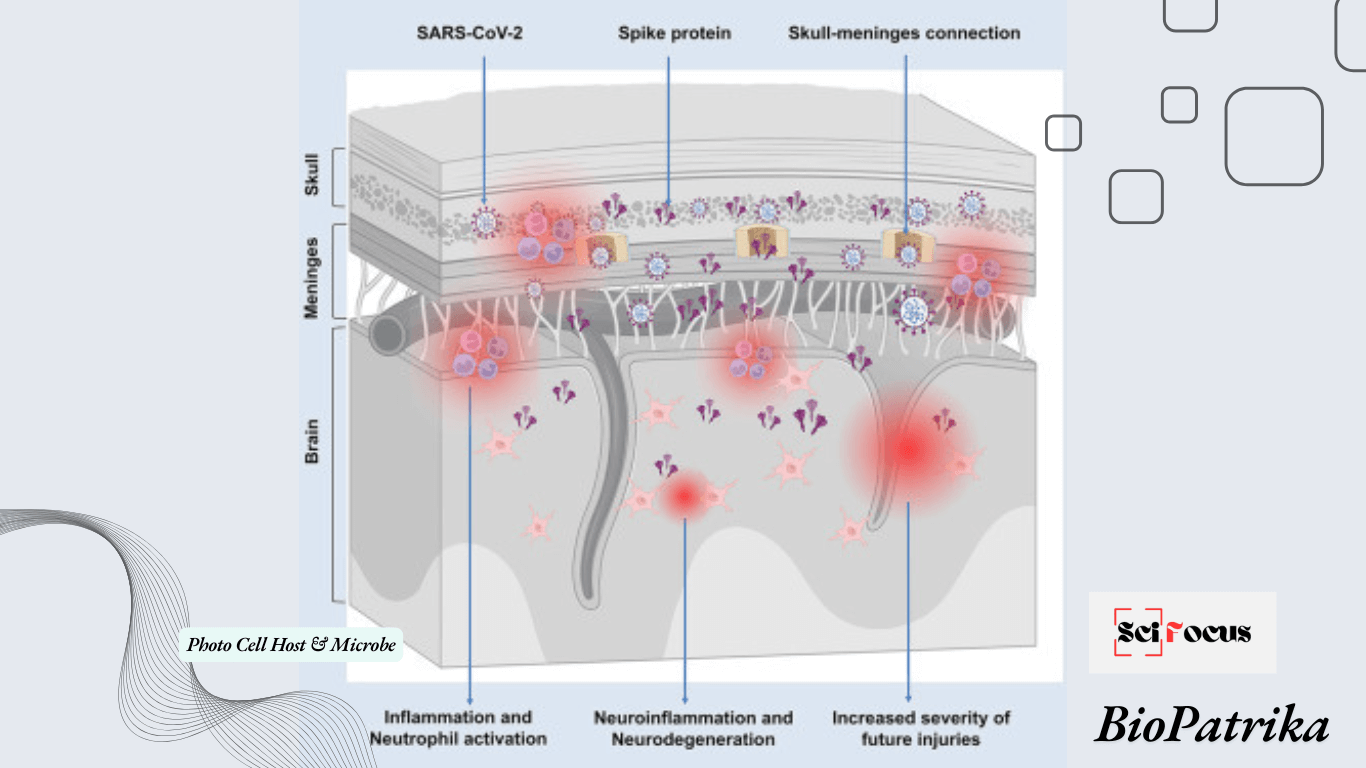
SciFocus/Dec 1, 2024 — A groundbreaking study in Cell Host & Microbe uncovers how the SARS-CoV-2 spike protein persists in the skull-meninges-brain axis of COVID-19 patients, shedding light on long-term neurological symptoms. The findings highlight persistent neuroinflammation and damage at the brain borders, even after viral clearance.
The persistence of the spike protein in brain-adjacent structures offers a critical clue to the lingering neurological effects of COVID-19, pointing to a need for targeted interventions.
Key Findings
- Spike Protein Persistence: SARS-CoV-2 spike protein remains in the skull, meninges, and brain borders long after infection, potentially driving ongoing inflammation.
- Experimental Validation: In mice, spike protein alone was sufficient to induce neuroinflammation, behavioral changes, and worse outcomes in models of stroke and brain injury.
- Neurological Biomarkers: Elevated neurodegeneration markers were detected in cerebrospinal fluid from long COVID patients.
- Immune Dysregulation: Proteomic analysis revealed disrupted inflammatory pathways in the skull-meninges-brain axis.
- Vaccine Effects: mRNA vaccines reduced but did not completely prevent spike protein accumulation in mice post-infection.
These findings deepen our understanding of the pathophysiology behind COVID-19’s lasting neurological effects and emphasize the need for therapies targeting spike protein-related inflammation to mitigate long COVID symptoms.
Source: https://www.sciencedirect.com/science/article/pii/S1931312824004384