

AI Transforms Plant Tissue Culture for Heeng Propagation
Research Summary: In this study, by using machine learning (ML) and deep learning (DL) algorithms, we identified the most suitable combinations of plant growth regulators for in vitro somatic embryogenesis and shoot organogenesis in heeng with 87% accuracy.
Author interview
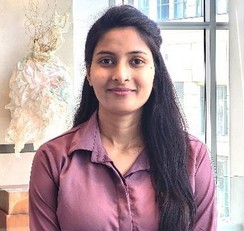
Khushbu Kumari is a Ph.D researcher at CSIR-IHBT Palampur. Her work focuses on understanding in vitro organogenesis and secondary metabolites production in Ferula assa-foetida L.
SIVB (Society for In Vitro Biology) 2025: https://sivb.org/InVitroReport/issue-59-3-july-september-2025/2025-bob-v-conger-plant-biotechnology-student-oral-presentation-competition/
Lab: Dr. Rohit Joshi, CSIR-Institute of Himalayan Bioresource Technology, Palampur
Lab social media: Twitter | Facebook
What was the core problem you aimed to solve with this research?
Ferula assa-foetida L. (commonly known as heeng) is a perennial plant with high medicinal value and economic significance. India is the world’s largest importer and consumer of heeng. Annually, India imports 1,500 tonnes of asafoetida resin worth USD 100 million from Afghanistan, Uzbekistan, and Iran. Thus, large-scale cultivation of this plant is required to establish it in the cold desert regions of India. Plant tissue culture is a powerful tool for the rapid multiplication of crops and medicinal plants. The process of establishing in vitro plants presents multiple challenges, including explant selection, optimization of media composition, shoots and roots induction, management of contamination, and regulation of somatic embryogenesis, each contributing to significant labor demands and procedural variability. We aimed to develop a more standardized, precise, and scalable framework for plant tissue culture using advanced artificial intelligence (AI) technologies.
How did you go about solving this problem?
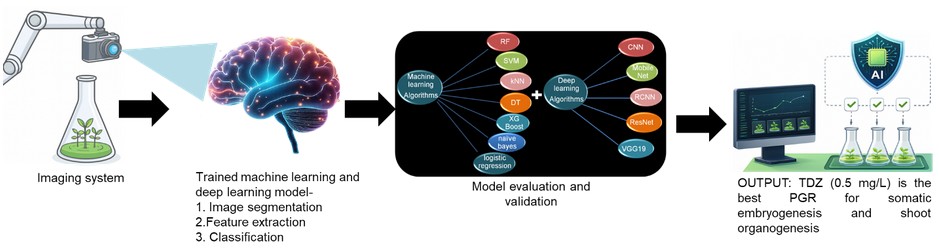
To address the challenges associated with tissue culture, Ferula assa-foetida was selected as the model plant, and its leaves were used for callus induction. The proliferated callus was cultured on Murashige and Skoog (MS) medium supplemented with eight distinct combinations of phytohormones to promote somatic embryogenesis and shoot organogenesis, and a high resolution image database was created. We used different artificial intelligence (AI) technologies such as machine learning (ML), artificial neural networks (ANN), and deep learning (DL), i.e., seven machine-learning algorithms (Random Forest, SVM, KNN, Decision Tree, XGBoost, Naïve Bayes, and Logistic Regression) and five deep-learning architectures (CNN, VGG19, ResNet50, MobileNet, and R-CNN) to analyse the accuracy and precision in detecting suitable media composition for redifferentiation and regeneration. The best-performing model was found to be CNN with 87% accuracy in identifying the optimal plant growth regulator.
The amalgamation of deep learning with plant tissue culture offers groundbreaking research that can lead to an algorithm-based green revolution – Dr. Rohit Joshi
How would you explain your research outcomes (Key findings) to the non-scientific community?
Our research shows that artificial intelligence can revolutionize the plant tissue culture industry. Earlier, growing plants in the lab required several formulations, repeated trials, and hard work, with less success often associated with manual error. Thus, next-generation technologies such as machine learning tools can accurately predict the outcomes using computational algorithms. The computer programs can automatically measure several features simultaneously and analyse better than the human eye to give more accurate results in less time. For farmers, this means faster availability of high-quality planting material, better disease-free plants, and improved crop production. In simple words, AI acts like a smart guide that makes plant tissue culture quicker, easier, and much more efficient, changing the field completely.
What are the potential implications of your findings for the field and society?
The image-based artificial intelligence techniques integrated with computational biology can precisely create a blueprint for future tissue culture protocols that can not only be used for difficult plant species but also improve genome editing and transformation strategies to support future functional genomics studies. These strategies can enhance the conservation of endangered medicinal plant species and foster modernization and innovation to boost rural livelihood. For example, mass scale propagation of hing in India can reduce the import dependency and promote self-reliance.
What was the exciting moment during your research?
The most exciting moment in my research came when the AI model not only predicted the optimal plant growth regulator combination, but the same treatment went on to produce vigorous, healthy shoots in the laboratory. Watching a computer-generated prediction unfold perfectly in real biological conditions felt like witnessing a scientific breakthrough in real time. Another unforgettable moment was to showcase to the global audience how AI can revolutionize plant tissue culture and shape the future of plant biotechnology during my oral talk at the Society for In Vitro Biology (SIVB) Conference in Norfolk, USA. The overwhelmingly positive response from researchers across the world was deeply motivating. I was especially honored to receive personal appreciation from the SIVB President, Dr. Piero Barone, and even more thrilled to be awarded the Third Prize in the oral presentation competition (https://share.google/djpvYW1sQxQIhUdkg).
Figure Caption: Schematic overview of the integrated experimental–computational workflow used to optimize plant growth regulator combinations in Ferula assa-foetida L.
Paper reference: Kumari K, Mittal S, Sharma K, Singh S, Upadhyay J, Acharya V, Kadyan V, Yadav SK, and Joshi R* 2025. Deep learning and machine learning modeling identify thidiazuron as a key modulator of somatic embryogenesis and shoot organogenesis in Ferula assafoetida L. Biology. 14(12): 1703 https://doi.org/10.3390/biology14121703
Explore more
🎤 Career – Real career stories and job profiles of life science professionals. Discover current opportunities for students and researchers.
💼 Jobs – The latest job openings and internship alerts across academia and industry.
🛠️ Services – Regulatory support, patent filing assistance, and career consulting services.