

How Cells Sense pH: G Proteins as Intracellular Chemical Sensor
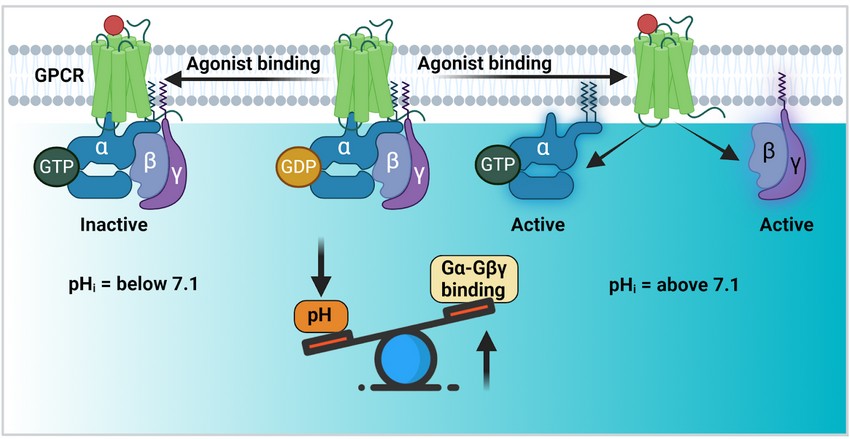
Research Summary: Cells constantly experience changes in internal acidity during normal physiology and disease. This study shows that the signaling protein Gαi directly senses intracellular pH and dynamically adjusts cellular signaling.
Researcher Spotlight
Dr. Ajit Prakash is a Research Associate at the University of North Carolina at Chapel Hill, focusing on G-protein signaling and GTPase drug discovery.
Linkedin: https://www.linkedin.com/in/ajit-prakash-51917953/
Twitter: https://x.com/ajitgenomics
Lab: Prof. Sharon L. Campbell, University of North Carolina at Chapel Hill, USA
What was the core problem you aimed to solve with this research?
Intracellular pH changes accompany many biological processes, including metabolism, stress, cancer progression, and inflammation. Despite this, it was unclear whether core signaling proteins directly detect these subtle chemical shifts. Our research aimed to determine whether the heterotrimeric G protein Gαi itself acts as an intracellular pH sensor and to uncover the molecular mechanism governing this sensing.
How did you go about solving this problem?
We used a multidisciplinary strategy combining nuclear magnetic resonance spectroscopy, protein engineering, mutagenesis, molecular dynamics simulations, and functional signaling assays. This approach allowed us to examine how pH changes influence Gαi structure, conformational dynamics, nucleotide cycling, and interactions with signaling partners.
How would you explain your research outcomes (Key findings) to the non-scientific community?
We discovered that Gαi is not just a signal relay but also a molecular sensor. When the cell’s internal acidity changes, Gαi subtly alters its shape and behavior, tuning how cellular messages are passed—much like a thermostat adjusting conditions based on the environment.
“Our study reveals that Gαi directly senses intracellular pH, dynamically tuning G-protein signaling in response to cellular conditions.”- Sharon Campbell.
What are the potential implications of your findings for the field and society?
Our findings reshape how we think about cell signaling by showing that signaling proteins actively interpret intracellular conditions. Because altered pH is a hallmark of diseases such as cancer, heart diseases and neurological disorders, this work opens new opportunities for understanding disease mechanisms and developing more precise therapeutic strategies.
What was the exciting moment during your research?
Gαi contains many charged residues that could potentially contribute to pH sensing, making it challenging to identify the critical ones. After extensive trial and error, we identified three key residues responsible for pH sensing. The defining “aha” moment came when mutating just these three residues completely abolished pH sensing, providing clear evidence for the underlying molecular mechanism.
Paper reference: Prakash A. et al. Molecular and functional profiling of Gαi as an intracellular pH sensor. Nature Communications (2025). https://www.nature.com/articles/s41467-025-58323-2
Explore more
🎤 Career – Real career stories and job profiles of life science professionals. Discover current opportunities for students and researchers.
💼 Jobs – The latest job openings and internship alerts across academia and industry.
🛠️ Services – Regulatory support, patent filing assistance, and career consulting services.