
Ultrasound-Generated Nanoscale Mechanical Stimulation to Regulate Stem Cell Differentiation
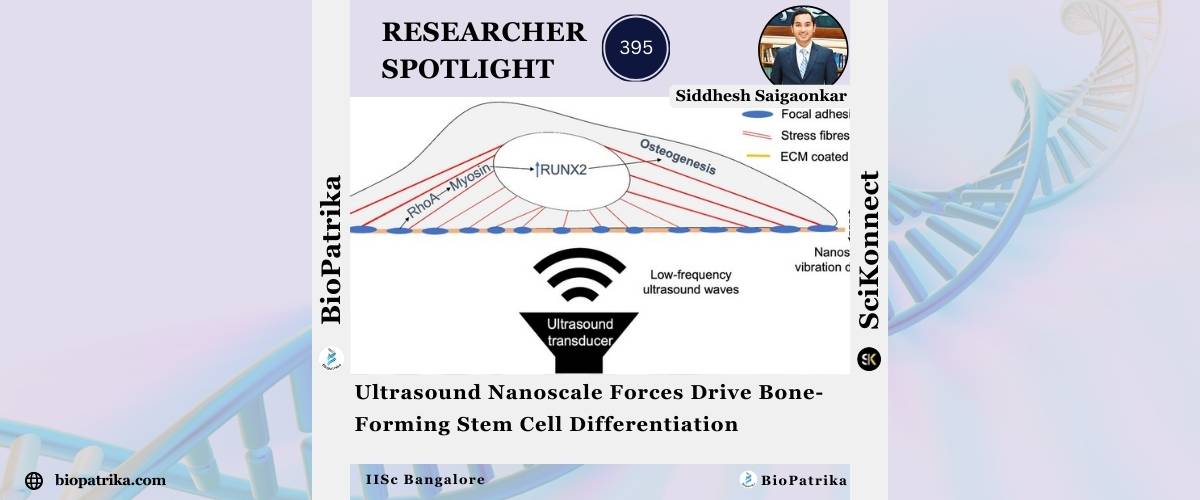
Research Summary: Low-frequency ultrasound generates nanoscale vertical displacements at the cell–substrate interface, which activate cytoskeletal contractility and promote osteogenic differentiation of human mesenchymal stem cells independent of matrix stiffness or biochemical osteoinducers.
Researcher Spotlight

Siddhesh Saigaonkar is a PhD student in Dr Ajay Tijore’s lab at the Indian Institute of Science. His work focuses on investigating the effect of ultrasound-generated mechanical forces on regulating stem cell differentiation and developing an ultrasound bioreactor for bone tissue engineering.
Linkedin: www.linkedin.com/in/siddhesh04
Twitter: https://x.com/SiddheshSai04
Instagram: https://www.instagram.com/sid_04__/
Lab: Dr Ajay Tijore, Indian Institute of Science, Bangalore
Lab social media: https://tijorelab.com/ (Mechanobiologics lab)
What was the core problem you aimed to solve with this research?
With the rising incidence of bone injuries due to accidents and osteoporosis, there is an urgent need for innovative bone regenerative strategies. Traditional grafting approaches face limitations such as donor site morbidity and poor osteoinductive potential, while biochemical growth factors are often associated with malignancy. Mechanical cues are well established as key regulators of mesenchymal stem cell fate; based on that, we came up with an innovative solution to induce osteogenesis in human mesenchymal stem cells using low-frequency ultrasound.
How did you go about solving this problem?
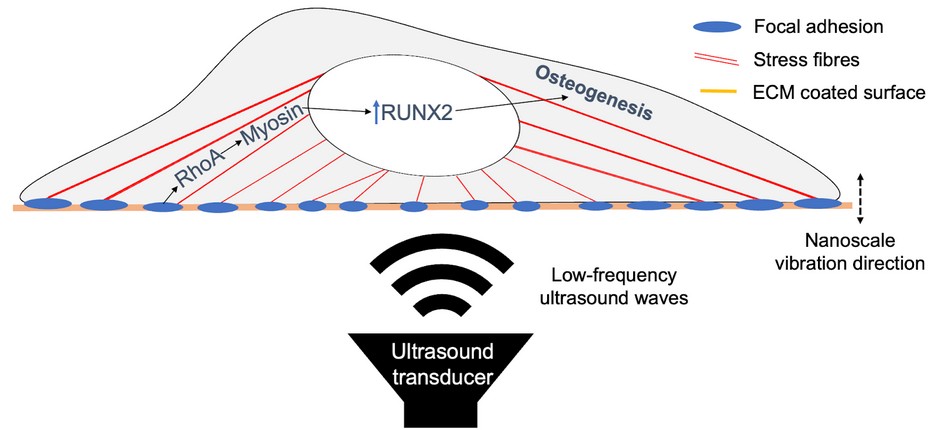
We have developed a custom-built ultrasound device that can deliver low-frequency ultrasound (39 kHz) at different levels of ultrasound pressure. This device has been used to study the effect of low-frequency ultrasound on the differentiation of human mesenchymal stem cells. After a series of optimizations, we observed that ultrasound pressure between 2–5 kPa, which generates nearly 30–60 nm nanoscale vibrations, can induce osteogenic differentiation in human mesenchymal stem cells.
“Ultrasound-generated nanoscale stimulation provides an exciting avenue for bone graft development to fulfill clinical demand and provide resources for rapid drug screening.” – Dr. Ajay Tijore
How would you explain your research outcomes (Key findings) to the non-scientific community?
Mesenchymal stem cells are mechanosensitive in nature and respond to different kinds of mechanical cues in their environment, which influence their differentiation into specific tissue types. For example, they can differentiate into osteocytes (bone), chondrocytes (cartilage), and adipocytes (fat). In this study, we found that nanoscale vibrations generated by low-frequency ultrasound can instruct mesenchymal stem cells to commit to a bone-forming lineage.
What are the potential implications of your findings for the field and society?
These findings establish low-frequency ultrasound as a non-invasive and scalable tool for regulating the fate of mesenchymal stem cells. By eliminating dependence on biochemical osteoinducers, this approach offers greater control and reproducibility for bone tissue engineering applications. In a broader context, low-frequency ultrasound-mediated mechanical stimulation could be integrated into bioreactor systems to facilitate the development of clinically relevant, Cell-engineered bone grafts, potentially improving regenerative therapies for bone defects and injuries.
What was the exciting moment during your research?
The most exciting moment was when I observed osteogenic commitment in hMSCs grown on soft substrates with ultrasound treatment, where osteogenesis is typically less likely due to mechanical cues from the substrate that provide a strong signal for adipogenic differentiation.
Paper reference: Saigaonkar, S., Joshi, A., Kumar, A., Choudhury, A. R., Pratap, R., & Tijore, A. (2025). Ultrasound-Generated Nanoscale Mechanical Stimulation to Regulate Stem Cell Differentiation. ACS Nanoscience Au. https://doi.org/10.1021/acsnanoscienceau.5c00163
Explore more
🎤 Career – Real career stories and job profiles of life science professionals. Discover current opportunities for students and researchers.
💼 Jobs – The latest job openings and internship alerts across academia and industry.
🛠️ Services – Regulatory support, patent filing assistance, and career consulting services.