
Career as a Research Scientist at Sanofi | mRNA & Drug Discovery | Biopatrika
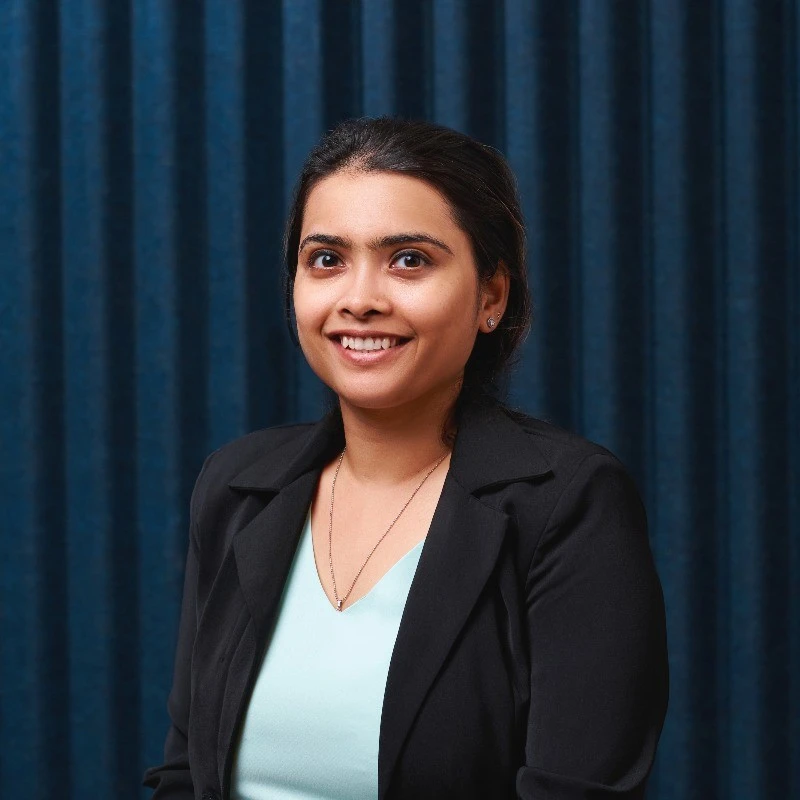
Career Konnect brings forward diverse and evolving career paths for life science professionals. In this edition, we feature Dr. Debadrita Pal, Scientist at Sanofi, USA. With a strong background in molecular biology, genetics, and developmental biology, her journey from India to the United States highlights how academic training, persistence, and strategic transitions can lead to impactful careers in drug discovery and mRNA vaccine development.
Current Position: Senior Scientist, Aldevron, USA
Career Konnect Interview
Q1. Debadrita, could you walk us through your academic journey and what motivated you to pursue a PhD?
I come from Kolkata, West Bengal, where I completed both my Bachelor’s and Master’s degrees from the University of Calcutta. During my studies, I developed a strong interest in molecular biology and genetics, which naturally led me to pursue a PhD. At the time, I knew I wanted to continue in research, but I did not have a clear roadmap for how to reach that goal.
I prepared for exams like GRE and TOEFL and applied to universities in the United States. Eventually, I joined New Mexico State University, where I conducted my PhD research in cell and molecular biology. My work focused on oocyte maturation, where I used advanced microscopy techniques such as confocal and fluorescent imaging to study protein functions during cell division. This research was important because defects in these processes can impact fertilization and developmental outcomes.
Q2. What resources or strategies helped you navigate the transition to studying abroad?
One of the most valuable resources for me was the United States India Educational Foundation (USIEF). Since I did not have personal connections in the US at that time, USIEF played a key role in guiding me through the application process.
They helped me understand how to select universities based on my GRE scores and field of interest. Instead of applying only to top-tier institutions, I learned the importance of applying across a range of universities to maximize opportunities. This guidance was crucial in helping me secure admission and transition smoothly into a PhD program in the US.
Q3. What did you work on during your postdoctoral research?
After completing my PhD, I pursued a postdoctoral position at Syracuse University. My research focused on developmental biology, specifically studying a transient tissue responsible for left-right body axis formation in zebrafish embryos.
While many researchers studied how this tissue functions, my work explored how it is formed. This was a fascinating phase of research because it involved understanding dynamic biological processes that are critical during early development.
Q4. How did you transition from academia to industry, and what was the hiring process like?
My transition to industry happened through a combination of networking and opportunity. I attended an online career seminar hosted by Sanofi while I was still working in the lab during my postdoc. I submitted my resume during that event, which led to further interactions.
The hiring process included multiple stages—a recruiter screening, an interview with the hiring manager, and a full-day panel interview with different team members. Shortly after, I received an offer.
This experience highlighted the importance of attending career fairs and actively engaging with companies, as these platforms can directly lead to job opportunities.
Q5. What does your current role at Sanofi involve?
I currently work in a high-throughput DNA group at Sanofi, where we focus on designing mRNA vaccines and supporting drug discovery efforts. My role involves applying molecular biology techniques, including cloning and assay development, to support vaccine design.
The work is fast-paced and collaborative, with a clear focus on delivering results that can directly impact human health. This translational aspect of research is one of the most rewarding parts of working in industry.
Q6. How does working in industry differ from academia?
One of the biggest differences is work-life balance. In academia, work often extends beyond lab hours, including reading literature, planning experiments, and writing grants.
In industry, while the work is still demanding, there is generally a clearer structure to the workday. Once I finish my work, I can spend time with my family, which allows for better balance.
Another key difference is the focus. In academia, research is driven by curiosity, whereas in industry, there are defined goals and timelines. The work is more application-driven, with a direct impact on product development and patient outcomes.
Q7. What visa pathways are available for international students transitioning into industry roles in the US?
As an international student, I started on an F-1 visa and then moved to Optional Practical Training (OPT), which allows STEM graduates to work for up to three years.
After OPT, companies can sponsor H-1B visas, which are subject to a lottery system. Alternatively, depending on qualifications, one may qualify for O-1 visas or employment-based green cards such as EB-1.
Understanding these pathways and planning ahead is important for a smooth transition into industry roles.
Q8. What skills are essential for a successful career as a research scientist in industry?
Technical skills are important, but soft skills play an equally critical role. Project management is essential, as you often handle multiple projects simultaneously and need to prioritize effectively.
Communication is another key skill. Being able to clearly present your work, simplify complex ideas, and engage with different stakeholders is crucial.
Additionally, the ability to “sell” your work—by demonstrating its value and impact—is important for gaining support and driving projects forward.
Q9. What advice would you give to aspiring scientists?
My advice is to focus on your own journey and take one step at a time. It is easy to compare yourself with others, but each career path is unique.
Be patient, stay consistent, and trust the process. Success does not happen overnight, but with persistence and self-belief, you will reach your goals.
Also, seek help when needed and be willing to support others. Sharing knowledge and experiences can make a meaningful difference in someone else’s journey.
Dr. Debadrita Pal’s journey highlights the importance of perseverance, strategic planning, and continuous learning in building a successful career in industry research. Her experience demonstrates how strong scientific foundations, combined with communication and adaptability, can lead to impactful roles in drug discovery and global healthcare.
Interested in sharing your journey?
Interested in sharing your career journey or job insights?
Check this out and fill the form today:
https://biopatrika.com/career/career-konnect/reimagining-careers-in-life-sciences-career-konnect/
New Book Launched – Molecules, Mentors & Mindsets: Building Indian Biopharma
Buy your copy today: https://biopatrika.com/science-society/book-molecules-mentors-mindsets-building-indian-biopharma-biocon/
Book Launch: Molecules, Mentors & Mindsets: Building Indian Biopharma | Biocon Focus
Online Interactive Course on Immunology | Starts form June 2026 | Register Today
Online Interactive Course on Immunology | Starts form June 2026 | Register Today