
🤖 AI Dentists Are Here: Autonomous Robot Performs Dental Procedure in 15 Minutes
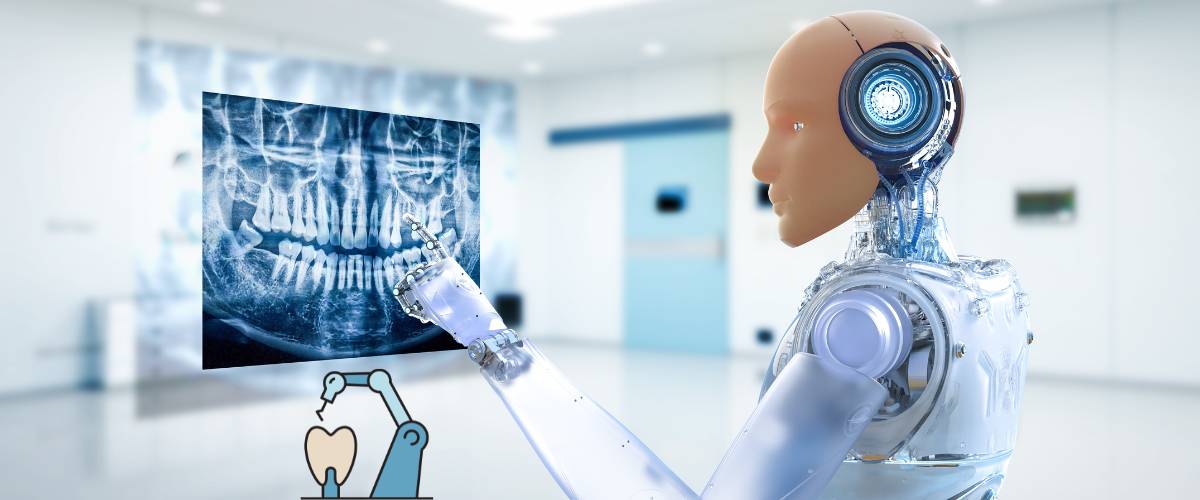
In a landmark breakthrough for medical technology, a fully autonomous AI-powered robotic dentist developed by Perceptive has successfully performed a complete dental crown preparation on a human patient—without any real-time human intervention. The procedure, which typically takes 2 to 2.5 hours, was completed in just 15 minutes, marking a transformative moment in the future of dental care.
🧠 How the AI Robotic Dentist Works
The system combines multiple advanced technologies into a single platform:
- Real-time 3D imaging using optical coherence tomography (OCT)
- AI-driven treatment planning using deep learning algorithms
- Precision robotic arm capable of sub-millimeter accuracy
During the procedure, the robot scanned the patient’s tooth, designed the optimal preparation geometry, and executed the treatment autonomously—all with sub-50 micrometer precision. The patient experienced no discomfort and resumed normal activity within 30 minutes.
📊 What the Study Shows
Published in the Journal of Dentistry (January 2026), the case report demonstrated:
- Successful crown preparation in a single visit
- >90% reduction in procedure time
- Ideal clinical outcomes, including precise margins and structural preservation
- No adverse events
This is the first documented fully autonomous dental procedure in humans, signaling a shift from assistive robotics to independent clinical decision-making systems.
🚀 Why This Is a Game-Changer
This innovation introduces a new paradigm often described as a “digital dentist” or “living AI system” in clinical care. Key advantages include:
- Elimination of human error and fatigue
- Consistent, standardized treatment quality
- Faster procedures and improved patient throughput
- Potential for 24/7 dental services
- Expanded access in remote and underserved regions
With global shortages of trained dental professionals, such systems could play a critical role in democratizing oral healthcare.
⚠️ Challenges and What’s Next
Despite its promise, several hurdles remain:
- Regulatory approvals (full autonomy still under evaluation)
- Validation across complex multi-tooth procedures
- Long-term durability and patient outcome studies
- Ethical considerations around AI-led clinical decisions
Future versions are expected to include haptic feedback, multi-tooth workflows, and enhanced AI personalization.
🔬 The Bigger Picture: Dentistry in 2035
This breakthrough is part of a broader trend in AI-driven healthcare automation, where machines are moving from assistive roles to primary operators. Alongside systems like Yomi S by Neocis, which already assist in implant surgeries, dentistry is rapidly becoming one of the most technologically transformed medical fields.
Experts believe that by 2035, dental clinics may look entirely different—featuring AI-guided diagnostics, robotic procedures, and fully digital workflows.
🌍 A New Era in Healthcare
The success of autonomous robotic dentistry marks the beginning of a new era where precision, speed, and accessibility converge. While human dentists will remain essential, their role may evolve toward oversight, complex decision-making, and patient care, supported by intelligent machines.
The question is no longer if AI will transform healthcare—but how fast.
Explore more
🎤 Career – Real career stories and job profiles of life science professionals. Discover current opportunities for students and researchers.
💼 Jobs – The latest job openings and internship alerts across academia and industry.
🛠️ Services – Regulatory support, patent filing assistance, and career consulting services.