



New Zebrafish Study Reveals RAPGEF1’s Critical Role in Embryonic Development and Somitogenesis
Research Summary: Our study reveals essential roles of RAPGEF1 in neural development, mesoderm patterning, somitogenesis, and embryonic morphogenesis using zebrafish genetic models.
Researcher Spotlight
Tuhina Prasad is a doctoral researcher at CSIR-CCMB exploring the molecular mechanisms governing vertebrate embryonic development, with particular emphasis on RAPGEF1-mediated regulation of neural crest specification, somitogenesis, and developmental signaling pathways in zebrafish.
Linkedin- www.linkedin.com/in/tuhina-prasad-29405066
Twitter- https://x.com/@tuhina_prasad
Lab: Dr. Megha Kumar, CSIR- Centre of cellular and molecular biology
Lab social media: https://sites.google.com/view/mklcsir-ccmb/home
What was the core problem you aimed to solve with this research?
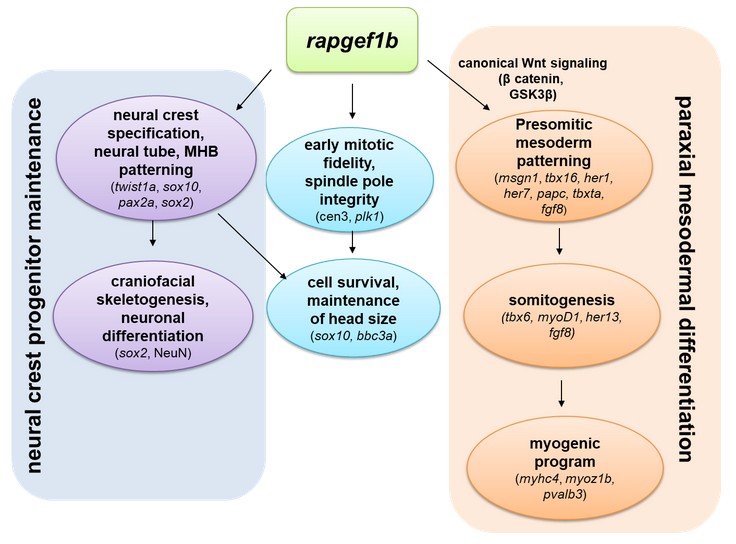
Although RAPGEF1 is known to regulate cell signaling and cytoskeletal dynamics, its developmental functions during vertebrate embryogenesis remained poorly understood. We aimed to determine how RAPGEF1 regulates early development, neural patterning, and mesoderm morphogenesis during embryonic development.
How did you go about solving this problem?
We used zebrafish as a vertebrate model system and generated RAPGEF1 paralog-deficient zebrafish. Through developmental, molecular, and imaging approaches, we analyzed embryonic morphology, neural crest development, somite formation, cell proliferation, and signaling pathways. We combined gene expression studies, immunostaining, and functional assays to identify how RAPGEF1 regulates tissue organization and embryonic patterning during development.
How would you explain your research outcomes (Key findings) to the non-scientific community?
Our research shows that RAPGEF1 acts like a crucial regulator during embryo formation. When this gene does not function properly, embryos develop severe defects in body shape, muscle segmentation, and nervous system formation. We discovered that RAPGEF1 paralogs have essential roles in guiding cells to grow, divide, and organize correctly during early development.
“This study uncovers previously unknown developmental functions of RAPGEF1 paralogs essential for embryonic patterning, morphogenesis, and tissue organization.” – Dr. Megha Kumar
What are the potential implications of your findings for the field and society?
These findings improve our understanding of how embryos form complex organs and tissues. Since defects in developmental signaling and cell organization contribute to congenital disorders, this work may help identify mechanisms underlying human birth defects and developmental diseases. Our study also provides a foundation for exploring RAPGEF1-related pathways as potential therapeutic targets in developmental and neurological disorders.
What was the exciting moment during your research?
One of the most exciting moments was observing clear developmental and somitogenesis defects in the rapgef1 depleted embryos and realizing that RAPGEF1 plays a much broader role in vertebrate embryogenesis than previously appreciated. It was particularly exciting to uncover how the paralogs contribute differently to early developmental processes.
Paper reference: Prasad, Tuhina et al. “Rapgef1 paralog-mediated regulation of Wnt/β-catenin signaling orchestrates early embryo tissue patterning and morphogenesis.” Cell communication and signaling. doi:10.1186/s12964-026-02905-0
New Book Launched – Molecules, Mentors & Mindsets: Building Indian Biopharma
Buy your copy today: https://biopatrika.com/science-society/book-molecules-mentors-mindsets-building-indian-biopharma-biocon/
Book Launch: Molecules, Mentors & Mindsets: Building Indian Biopharma | Biocon Focus