
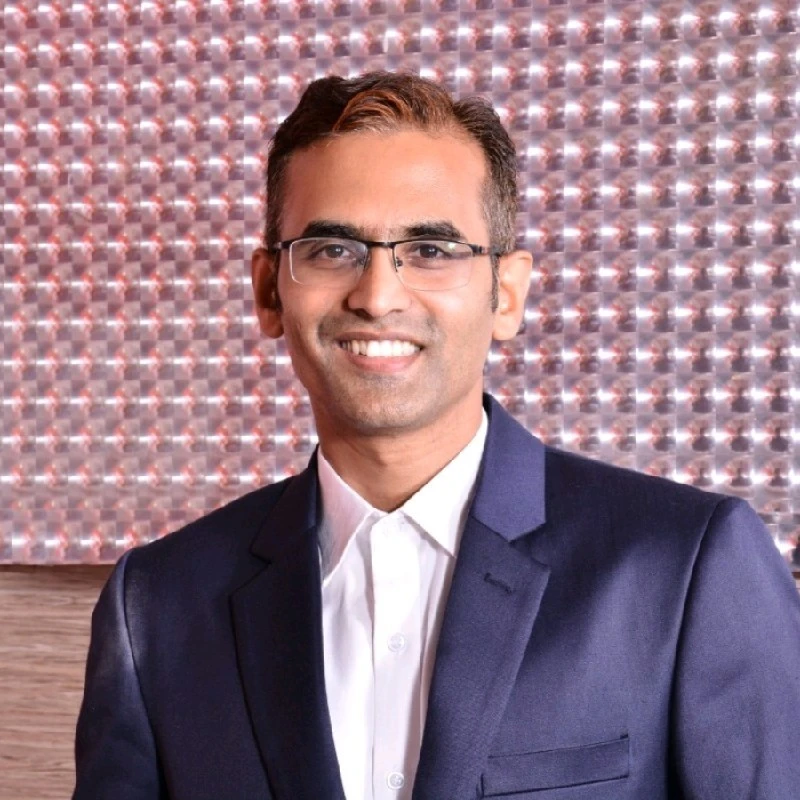
Career as a Research Scientist (Industry) after PhD – Dr. Arvind Goswami | Molecular Biologist | BioPatrika
Career Konnect brings forward diverse and evolving career paths for life science professionals. In this edition, we feature Dr. Arvind Goswami, Principal Molecular Biologist at ImmTune Therapies (Now Deliver Biosciences Ltd.), UK. With a strong background in virology, molecular biology, and antibody engineering, his journey from India to the United States and now Europe highlights how adaptability, self-reflection, and interdisciplinary skills can shape impactful careers in biotech and startups.
Career Konnect Interview
Q1. Arvind, could you walk us through your academic journey and early motivations for pursuing research?
I began my academic journey with a Master’s in Virology, which was a relatively new and well-structured program at the time, supported by strong infrastructure and focused on diagnostics and handling viral samples. This exposure played a significant role in shaping my understanding of biological systems and sparked my interest in research.
My fascination with molecular biology and host–virus interactions deepened during this time. I found myself drawn to understanding biological processes at a mechanistic level—visualizing how molecules function and asking fundamental questions. This curiosity naturally led me to pursue a PhD at the Indian Institute of Science (IISc), where I further developed my scientific thinking and research skills.
Q2. What motivated your transition from PhD to postdoctoral research?
During my PhD, I worked on disease-related questions, including aspects of neurodegenerative conditions such as Parkinson’s disease. One of the key questions that intrigued me was why certain proteins or pathways affect specific cell types while leaving others unaffected.
This curiosity motivated me to explore deeper mechanistic insights, particularly in signaling and cell-type specificity. I actively looked for labs working on these questions and eventually joined a postdoctoral position at Yale School of Medicine.
The postdoctoral phase allowed me to adopt a discovery-driven mindset and expand my expertise. It was a period of intellectual growth, where I learned to approach scientific questions from multiple perspectives.
Q3. What influenced your decision to transition from academia to industry?
Initially, like many researchers, I considered pursuing an academic career. However, over time, I realized that certain aspects of academia—particularly grant writing—did not align with my interests.
I found that I enjoyed teamwork, collaboration, and presenting ideas more than writing extensive grants. At the same time, I wanted to remain connected to science and contribute to meaningful applications.
This led me to explore industry roles, where I could combine scientific knowledge with collaborative work environments and faster-paced problem-solving. I discovered opportunities through platforms like LinkedIn and began actively networking, which played a crucial role in my transition.
Q4. How was your transition from academia to industry, particularly the application and interview process?
The transition required a shift in mindset, especially in how I presented my skills. I became more active on LinkedIn, optimized my profile, and engaged with professionals in the field.
The interview process in industry places significant emphasis on soft skills. While technical knowledge is important, interviewers are equally interested in understanding how you handle challenges, communicate with teams, and adapt to different situations.
In my experience, demonstrating the right attitude, problem-solving ability, and teamwork skills was critical. Industry values individuals who can learn quickly and contribute effectively within a team.
Q5. What skills from your PhD were most valuable in your industry role?
My PhD provided me with a strong foundation in molecular biology and biochemical techniques, including cloning, protein expression, and assay development. These technical skills were directly applicable to my industry roles, particularly in product development and antibody engineering.
In addition to technical expertise, the problem-solving mindset developed during my PhD was extremely valuable. Being able to design experiments, troubleshoot issues, and think critically helped me handle complex projects in industry.
Q6. How does working in a startup differ from working in a large company?
Working in a large company like Biocon provides a structured environment, where roles and responsibilities are clearly defined. You typically focus on a specific part of a larger project, with support from multiple departments.
In contrast, startups offer a much more dynamic and flexible environment. You are involved in multiple aspects of the organization—from setting up labs and managing budgets to contributing to scientific strategy and even business decisions.
This environment requires adaptability and the ability to handle diverse responsibilities. While it can be challenging, it also provides a unique opportunity to learn and grow rapidly.
Q7. What does the hiring process in startups typically look like?
The hiring process in startups is often more focused on evaluating mindset and problem-solving ability. The initial rounds typically assess your enthusiasm, understanding of the role, and alignment with the company’s goals.
Subsequent rounds may involve technical discussions or presentations, where you are expected to demonstrate how your skills match the job requirements. You may also be given scenario-based questions to evaluate your ability to think strategically and propose solutions.
Finally, discussions around compensation and expectations take place. Asking thoughtful questions during the interview can leave a positive impression and demonstrate genuine interest in the role.
Q8. What advice would you give to PhD students preparing for industry careers?
One of the most important things is self-reflection. Regularly assess your interests, strengths, and long-term goals. Be honest with yourself about what you enjoy and what you want from your career.
Flexibility is also key. Career paths are rarely linear, and being open to change can help you explore new opportunities.
In addition, focus on developing both technical and soft skills. Communication, teamwork, and adaptability are just as important as scientific expertise in industry roles.
Q9. How important is mentorship in shaping your career?
Mentorship has been a cornerstone of my journey. I have been fortunate to learn from mentors at every stage—from teachers and academic advisors to industry leaders and colleagues.
Each mentor contributed in different ways, whether by providing guidance, sharing experiences, or offering constructive feedback. I believe that actively seeking mentorship and learning from others is essential for personal and professional growth.
Q10. How do you approach personal growth and self-reflection?
Self-reflection is something I practice regularly. I often write down my thoughts, analyze my experiences, and evaluate my progress. This helps me gain clarity about my goals and identify areas for improvement.
I believe that taking time to reflect allows you to make better decisions and stay aligned with your aspirations. It is a habit that has significantly influenced my career path.
Dr. Arvind Goswami’s journey highlights the importance of self-awareness, adaptability, and continuous learning in building a successful career in industry. His experiences demonstrate that combining strong scientific foundations with soft skills and strategic thinking can open doors to diverse opportunities in biotechnology and beyond.
Interested in sharing your journey?
Interested in sharing your career journey or job insights?
Check this out and fill the form today:
https://biopatrika.com/career/career-konnect/reimagining-careers-in-life-sciences-career-konnect/
New Book Launched – Molecules, Mentors & Mindsets: Building Indian Biopharma
Buy your copy today: https://biopatrika.com/science-society/book-molecules-mentors-mindsets-building-indian-biopharma-biocon/
Book Launch: Molecules, Mentors & Mindsets: Building Indian Biopharma | Biocon Focus
Online Interactive Course on Immunology | Starts form June 2026 | Register Today
Online Interactive Course on Immunology | Starts form June 2026 | Register Today