
Researchers proposed a “non-antibiotic” strategy against antimicrobial resistance, the ability of germs like bacteria to fight off antibiotics.
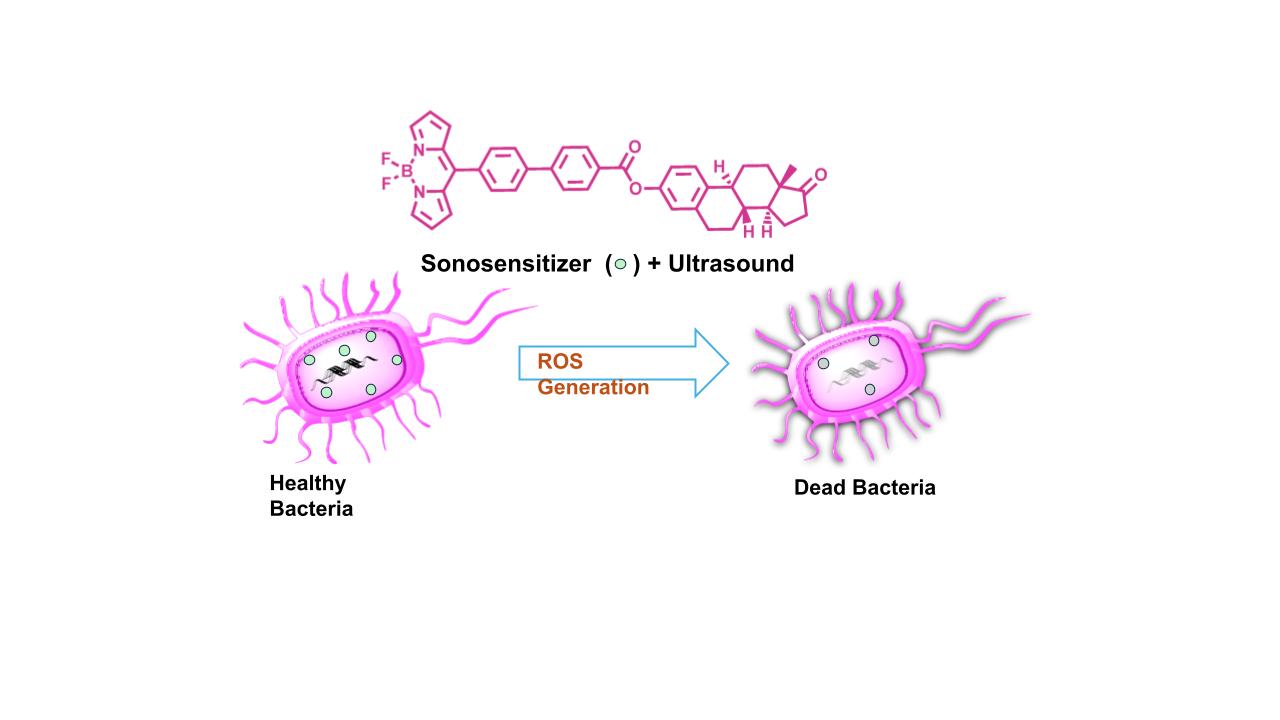
The molecule, estrone-linked BODIPY, killed 99.9% bacteria with microbubble-assisted sonodynamic therapy, highlighting an encouraging alternative to existing antibiotics.
In the long term, this approach may be a viable option for combating deep-seated wounds and implant-associated isolated bacterial infections that may be otherwise challenging to treat.
IIT Gandhinagar Researchers Develop Ultrasound-Activated Molecules with the Potential to Kill Antibiotic-Resistant Bacteria
GANDHINAGAR: As a response to the grave problem of antimicrobial resistance (AMR), researchers from the Indian Institute of Technology Gandhinagar (IITGN) have developed ultrasound-activated molecules. Their findings were published in Chemistry – An Asian Journal.
Antibiotics treat a variety of conditions, ranging from common throat ailments to deadly diseases like meningitis and tetanus. However, doctors worldwide are now increasingly encountering bacteria that are not responding to treatment. This phenomenon, known as AMR, is making routine infections harder to treat.
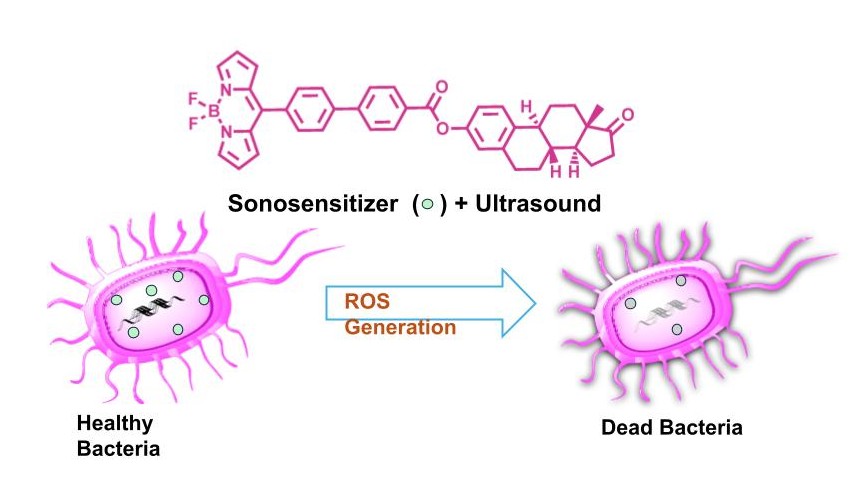
Antimicrobial sonodynamic therapy (SDT) is a promising strategy to block bacterial growth that uses ultrasound to activate agents called sonosensitizers. Sonosensitizers produce reactive oxygen species (ROS) that seriously damage the bacteria through multiple mechanisms. A major advantage of ultrasound is its ability to reach several centimetres into tissues, making SDT a viable option for combating localised deep-seated infections that may be otherwise difficult to treat. When the ultrasound moves through liquid, it generates and rapidly collapses bubbles, a process known as cavitation. The collapse of bubbles releases bursts of energy that can split water molecules into components, reacting with oxygen to form ROS, which act like lethal weapons for killing bacteria. Image guidance and focusing of ultrasound can help avoid collateral damage.
Escherichia coli, bacteria known to cause diarrhoea, fever, and urinary tract infections, can often exhibit AMR. Their double-layered wall acts as a barrier to the antibiotics, ensuring the bacteria’s survival. To combat these issues, IITGN researchers designed molecules using BODIPY dyes and esterone.
Boron-dipyrromethene (BODIPY) dyes, explored previously in photodynamic cancer therapy, involve the use of light-activated drugs for targeting and destroying cancer. These dyes also glow brightly upon light exposure, which helps spot cancer cells without invasive cuts (bioimaging). However, their research in terms of antibacterial SDT remains limited. Esterone is linked to BODIPY to facilitate the latter’s entry into the bacterial cell in the experiments.
The team synthesised four estrone-linked BODIPY derivatives with different linkers between the estrone unit and the BODIPY. Dr Iti Gupta, Professor in the Department of Chemistry at IITGN and the Principal Investigator at the Synthetic Pigments Lab, described, “Our experiments showed that EBD-1 was the best performing derivative as it generated a significant amount of ROS capable of killing bacteria after exposure to ultrasound. Antibacterial activity against the Escherichia coli bacteria revealed that a combination of ultrasound, EBD-1, and clinically approved microbubbles eliminated 99.9% of the bacteria.” Simply put, microbubbles are tiny, gas-filled bubbles with a protein or lipid shell. They act as cavitation nuclei and intensify the bubble generation and collapse effect.
“This research shows the feasibility of using a combination of cell-penetrable BODIPY and ultrasound-driven cavitation for antibacterial SDT. If these laboratory findings show similar trends in future clinical trials, this approach could develop as an encouraging alternative to treat localised resistant bacterial infections,” said Dr Himanshu Shekhar, Associate Professor in the Department of Electrical Engineering at IITGN and one of the Principal Investigators at the Medical Ultrasound Engineering Laboratory. Such research is the need of the hour, as it aligns with the National Action Plan on Antimicrobial Resistance (2025–2029). This initiative by the Government of India is a multisectoral ‘One Health’ mission to combat the severe threat of drug-resistant bacteria through effective surveillance, information dissemination, and innovative research.
Future research can focus on exploring the optimal design of sonosensitizers and combinational treatment strategies, including the microbubble type and acoustic conditions, to name a few parameters. Further, the present work needs to be validated in animal and clinical trials for this approach to be translated to the clinic. The researchers acknowledged IITGN, Anusandhan National Research Foundation, Department of Biotechnology, and the Scheme for Transformational and Advanced Research in Sciences (STARS) programme (Ministry of Education) for funding support.
Explore more
🎤 Career – Real career stories and job profiles of life science professionals. Discover current opportunities for students and researchers.
💼 Jobs – The latest job openings and internship alerts across academia and industry.
🛠️ Services – Regulatory support, patent filing assistance, and career consulting services.