
Career in Technology Development after PhD | Intel Engineer Journey | Biopatrika
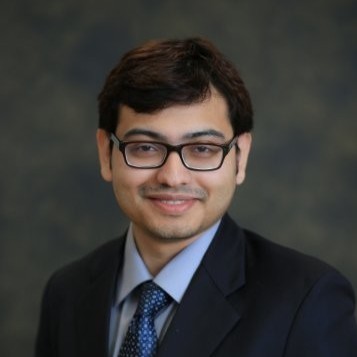
Career Konnect brings forward diverse and evolving career paths for science and engineering professionals. In this edition, we feature Shayandev Sinha, PhD, Development Yield Engineer at Intel Corporation, USA. With a strong background in mechanical engineering, fluid mechanics, and materials science, his journey from IIT Kanpur to the University of Maryland and Harvard, and eventually into semiconductor technology development at Intel, highlights how interdisciplinary skills can lead to impactful industry careers.
Currently: Senior Engineer, Onto Innovation, USA
Career Konnect Interview
Q1. Dr. Sinha, could you walk us through your academic journey and how it led to your current role?
Shayandev:
My interest in science, particularly physics and mechanics, began quite early during my school years. I pursued mechanical engineering for both my Bachelor’s and Master’s degrees at IIT Kanpur. During this time, I developed a deep interest in mechanics at the nanoscale and fluid-solid interactions.
I then moved to the University of Maryland for my PhD in mechanical engineering, where I continued exploring these topics with applications in fluid mechanics, nanoparticle adhesion, and additive manufacturing. After completing my PhD, I worked at the Rowland Institute at Harvard University, focusing on fluid interactions at different scales.
Since 2019, I have been working at Intel Corporation in the technology development group, specifically in yield engineering. My work involves contributing to advanced semiconductor technologies such as Intel 4 and Intel 3. Over time, my journey has evolved from core mechanical engineering into a more interdisciplinary space involving materials science, biotechnology applications, and semiconductor technology.
Q2. What skills from your PhD have been most useful in your role at Intel?
Shayandev:
A PhD equips you with much more than just technical knowledge. One of the most valuable skills I gained is the ability to analyze data deeply and interpret patterns effectively. Understanding correlations, designing experiments, and exploring parameter spaces are critical skills that translate well into industry.
Another important skill is resource and time management. During a PhD, especially in experimental research, you often work with limited resources. Learning how to optimize and manage these resources efficiently becomes extremely valuable in a fast-paced industry environment.
These transferable skills—data analysis, experimental design, and resource management—play a significant role in my current work.
Q3. Were there any skills you wish you had developed more before entering industry?
Shayandev:
While I had a good foundation in programming, I felt that a deeper understanding of statistics would have been beneficial. In a data-driven industry like semiconductors, statistical analysis plays a crucial role.
Although I was familiar with basic concepts, I had to invest time in learning advanced statistical methods after joining Intel. Having this knowledge beforehand would have made my transition smoother.
Q4. How was your transition from academia to industry, especially in terms of work culture?
Shayandev:
For me, the transition was relatively smooth because my academic environment was already fast-paced and deadline-driven. However, there are some key differences between academia and industry.
In academia, research often involves exploring a problem in depth and waiting until sufficient data is available before drawing conclusions. In contrast, industry operates in a more data-driven and fast-moving manner, where decisions often need to be made quickly based on available data.
Additionally, the output expectations differ. Academia focuses on publications and grants, while industry emphasizes product development, patents, and delivering tangible results.
Q5. What are your views on pursuing a postdoc for those considering industry careers?
Shayandev:
I believe that a postdoc should be approached as a transitional phase rather than a long-term goal. Its duration should align with your career objectives.
If your goal is to enter academia, a postdoc is often essential. However, if your aim is to transition into industry, it is important to evaluate whether a postdoc adds value to that path.
Many people pursue postdocs without a clear plan, which can delay their transition into their desired career. It is crucial to identify your long-term goals and make decisions accordingly.
Q6. What advice would you give to PhD students considering careers in technology development or industry?
Shayandev:
The most important step is to define your career goals early. Whether you want to pursue academia, industry, or an entirely different path, having clarity will help you make informed decisions.
It is also important to recognize that a PhD opens up a wide range of opportunities beyond traditional research roles. You can apply your skills in various domains, including technology development, product innovation, and even completely different fields.
Being adaptable and open to learning is key. The skills you develop during your PhD can be applied in multiple ways, and success often depends on how effectively you leverage them.
Q7. What does your current role involve on a day-to-day basis?
Shayandev:
My role in technology development at Intel involves working on yield engineering for advanced semiconductor technologies. This includes analyzing data, identifying patterns, and contributing to improving manufacturing processes.
The work is highly dynamic and involves solving complex problems under tight timelines. Collaboration with different teams is also a key aspect, as technology development requires interdisciplinary efforts.
Short-term goals typically revolve around project deliverables, while long-term goals focus on contributing to the development of new technologies and improving existing ones.
Dr. Shayandev Sinha’s journey highlights how interdisciplinary knowledge, strong analytical skills, and adaptability can lead to impactful careers in technology development. His experience underscores the importance of aligning career decisions with long-term goals and being open to diverse opportunities beyond traditional academic paths.
Interested in sharing your journey?
Interested in sharing your career journey or job insights?
Check this out and fill the form today:
https://biopatrika.com/career/career-konnect/reimagining-careers-in-life-sciences-career-konnect/
New Book Launched – Molecules, Mentors & Mindsets: Building Indian Biopharma
Buy your copy today: https://biopatrika.com/science-society/book-molecules-mentors-mindsets-building-indian-biopharma-biocon/
Book Launch: Molecules, Mentors & Mindsets: Building Indian Biopharma | Biocon Focus