
Career in Biotechnology Training & Placements | Manish R. Bhat, PhD | Biopatrika
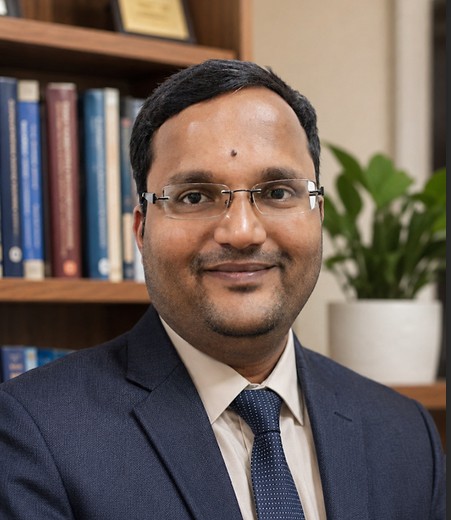
Manish R. Bhat, Ph.D is a renowned microbiologist and educator specializing in Training and placements. He is dedicated to academic excellence, industry collaboration, student mentorship, and transformative career development initiatives. Dr Manish comes across as a person with a good interdisciplinary knowledge base, having completed an M.Sc. in Microbiology, Ph.D. in Biotechnology, MBA in Human Resources, and Diploma in Training and Development from Indian Society for Training and Development.
Career Konnect Interview
Part 1: General Information
He is presently working as Assistant Professor & In-charge of Training and Placements, School of Biotechnology and Bioinformatics, D.Y. Patil University, Navi Mumbai. He has shown initiative, resilience and innovative problem-solving skills in his career.
Part 2: Career Path and Education
Academic Background: What was your PhD specialization? From which university did you obtain your PhD?
I have completed my Ph.D. in Biotechnology from D. Y. Patil University Navi Mumbai and I have a Microbiology academic background. My PhD work was about isolation and characterization of soil bacteria producing L-asparaginase for potential use as cancer therapeutics. At present, I am a Recognized Ph.D. Supervisor in Biotechnology at the same university, supervising research scholars in interdisciplinary and applied biosciences research.
Career Path: Could you briefly outline your career path since completing your PhD? What were the key steps and decisions that led you to your current position?
Post-Ph.D in Biotechnology, I had a career that combined academics, administration, and student development. I realized the importance of leadership and management in academics and decided to pursue Executive MBA in Human Resources from ITM University in association with Southern New Hampshire University and thereafter, Diploma in Training and Development from Indian Society for Training and Development.
In 2017, I reached a major milestone in my career when I was appointed as In-charge, Training and Placement Officer at D. Y. Patil University. Through strategic planning, industry engagement and dedicated efforts I was able to improve the placement and training initiatives for Biotechnology, Food Sciences and Bioinformatics/Data Science programs. Over the years I have independently conducted career development activities for nearly 300 students a year, developing expertise in the areas of academic administration, student mentoring, industry collaboration and organizational leadership.
Role of PhD: How important was your PhD in securing your current position? Did it provide you with specific skills or knowledge that were essential for your role?
Obtaining a Ph.D. degree was much more than just an academic achievement for me; it was a dream come true. Right from the beginning of my life, Since childhood plays I wanted to be part of an elite group of academics where I used to address myself as “Dr. Manish Bhat” and as a head of department.
Ph.D. in Biotechnology had made a significant contribution in shaping my career and helping me secure my present job. Pursuing a Ph.D. has immensely improved my research abilities, analytical mind, scientific writing skills, presentation skills, and problem-solving techniques. Furthermore, pursuing a Ph.D. gave me important attributes like patience, perseverance, commitment towards academia, and discipline.
Apart from gaining technical skills, a Ph.D. has been of immense help to me in my teaching and mentorship work. Pursuing a Ph.D. has enabled me to train my students with research and innovative thinking.
Part 3: Job Role and Responsibilities
Daily Responsibilities: Could you describe a typical workday for you? What are your primary responsibilities and tasks?
As an academician and In-charge Training & Placement Officer at D. Y. Patil University, my position is dynamic and multi-dimensional, being student-centered. The roles that I play include managing academics, engaging with the industries, mentoring students, and managing other duties. I engage myself with industries, recruiters, and research firms so that students in Biotechnology, Food Sciences, and Bioinformatics/ Data Sciences get good opportunities.
The key areas where I engage are career counseling, resume creation, interview preparation, and training for the students according to the present day industry needs. I take care of organizing placement drives, conducting analysis of the training needs, maintaining placements, and enhancing employability measures through feedback from recruiters and students. At the same time, I continue my teaching, research activities, and act as a Ph.D. Guide.
Skillset: What key skills (technical and soft) are essential for your role? How did your degree help you develop these skills?
My role requires a strong mix of technical skills, leadership, administrative ability, and personal interaction skills. A solid background in Microbiology and Biotechnology is crucial for guiding students, understanding industry needs, and coordinating academic and training programs. Skills in research, analytical thinking, scientific communication, presentation, and data interpretation are also vital in my work.
Strong soft skills like communication, leadership, networking, problem-solving, flexibility, and time management are essential for connecting with students, recruiters, faculty, and industry professionals. Earning my Ph.D. in Biotechnology improved my research skills, discipline, perseverance, and confidence in my profession. My knowledge of Human Resources and Training and Development boosted my management, planning, and team coordination skills, helping me effectively connect academia and industry.
Challenges and Rewards: What are the biggest challenges and rewards of your job?
One of the biggest challenges in my role is to make students industry-ready professionals by equipping them with not only the technical knowledge but also communication skills, confidence, professionalism and corporate mindset. To guide students through career opportunities in Biotechnology, Microbiology, Bioinformatics and Food Science, continuous planning, upskilling and strategic execution is needed to adapt to evolving industry trends and educational policies.
Training and mentoring is a developing process, with every academic batch coming with its aspirations and skill gaps. Yet the most rewarding aspect of my profession is watching students achieve career success and professional confidence. The joy in students’ eyes and the blessings from their parents after successful placements fill me with immense satisfaction and inspire me to keep contributing towards student empowerment and career development.
Work-Life Balance: How do you balance your work and personal life? What strategies do you use to manage stress and maintain a healthy work-life balance?
Work-life balance for me is quite crucial considering the dynamic roles which I am supposed to play as an academician, administrator, and mentor to students. I strongly believe that good balance is achieved via discipline, effective time management, prioritizing activities, and being optimistic. This enables me to keep my professional obligations in check without affecting personal life adversely.
For efficient stress management and coping with workplace pressure, I emphasize on goal setting, proper planning, adaptability, and emotional resilience. In addition to professional duties, family time and taking regular breaks also rejuvenate me psychologically.
It should be noted here that mentoring students and contributing towards building up their careers is itself a rewarding experience for me. From the past experiences, I have realized that patience, composure, and having a problem-solving mindset are some of the vital ingredients which ensure productivity and balance.
Part 4: Future Opportunities
Career Progression: What are the potential career paths and opportunities for someone in your position?
A career in academics and Training & Placement Management can offer varied options in teaching, research, academics administration, industrial collaborations, and student development. People in such careers can move into higher positions within the academia or become academic advisors in various streams such as biotechnology, bioinformatics, and food sciences.
The current trend for industry-academia collaborations, innovation, entrepreneurship, and skill development has created huge opportunities for people working in corporate training, career counseling, mentoring startups, and academic leadership. In my personal opinion, this career can be a wonderful opportunity for mentorship of students, institution building, and producing skilled and competent professionals.
Industry Trends: What are the current trends and challenges in the biotech industry? How do you see your role evolving in the future?
Biotechnology, Bioinformatics, Data Science, and Food Science & Technology are all advancing swiftly with the help of technology, including AI and automation, genomics, personalized medicine, computational biology, and sustainable foods.
A significant challenge faced in this scenario is that while industries are becoming more demanding about certain qualities that include having interdisciplinary knowledge, digital know-how, critical thinking, adaptability, and good communication skills, there seems to be a considerable difference in what is taught and what the industry expects from its employees.
This is why I am convinced that as a teacher, I need to become more than just a teaching professional; I should take on a mentor-like role that focuses on preparing my students for industry demands through skills, technology, internships, collaborations, and more.
Advice for Aspiring Scientists: What advice would you give to early-career researchers who are aspiring to work in the biotech industry?
To all aspiring researchers and young professionals who wish to join the Biotechnology industry, my recommendation would be to build themselves as professionals with a solid combination of technical, practical, adaptable, and ethical abilities. As biotechnology is changing at a rapid pace, continuous learning and development are inevitable requirements for achieving success in this field.
While academic achievements play a very important role, it is also necessary to improve various other skills such as communication, problem solving, teamwork, data analytics, and internship/industry experience. Young researchers must also have patience, discipline, and resilience as their careers and research activities require hard work.
However, more than anything, one must never confine himself/herself only to pursuing a degree; rather, one must try to become a skilled and ready-to-work professionals.
Resources: Are there any resources, networks, or training programs that helped you in your career that you would recommend?
I firmly believe that an excellent academic background, solid technical expertise, vision, and having a SMART career goal is very vital to achieve success in life. As teaching has been my passion since childhood, I stayed very focused and consistent in realizing my vision, largely due to my academic background as well as my constant desire for learning.
It would be highly recommended for future professionals to attend conferences, workshops, training, oral and poster presentations. According to my experience, networking can play a great part in making your career grow.
Furthermore, learning about the journey of other successful people through mentorship, success stories, biographies, and interactions with successful individuals may be quite motivational and career shaping. For instance, I have seen many of my students shine in the field of Biotechnology, Bioinformatics, and Food Sciences, with some even establishing their own successful ventures.
Part 5: Salary
Salary range (annual) for Freshers:
Freshers in Biotechnology, Bioinformatics, Data Science, and Food Science & Technology can expect relatively lucrative salaries at the entry level stage in India. The salary structure depends significantly on the technical skill set, internships completed, certifications obtained, specializations, and industry experience. Individuals with good technical skills related to Artificial Intelligence, Programming, Computational Biology, Analytics, and Data Science will be relatively more lucrative.
From my experience working as a Training & Placement officer, I have found that individuals with good academic fundamentals supplemented with practical exposure, effective communication, adaptability, and industry-relevant skills progress professionally at a much faster pace.
Salary range (annual) for someone with your experience:
In case of experienced professionals, the compensation packages are mostly based on experience, qualifications, management skills, research output, industry interaction, consultancy expertise, and organizational role.
The professionals engaged in academics, research, administrative, and Training & Placement related tasks enjoy many growth prospects within well-known universities and institutions.
The true satisfaction, however, in this line comes not only from the monetary side but much more from teaching and guiding students, industry-academy collaboration, growing institutions, and developing future researchers and professionals. It is indeed very satisfying for any professional to see students succeed in life.
New Book Launched – Molecules, Mentors & Mindsets: Building Indian Biopharma
Buy your copy today: https://biopatrika.com/science-society/book-molecules-mentors-mindsets-building-indian-biopharma-biocon/
Book Launch: Molecules, Mentors & Mindsets: Building Indian Biopharma | Biocon Focus