

From Histone Biochemistry to Neuroepigenetics: Exploring Genome Regulation and Neurodegenerative Disease at Northwestern University
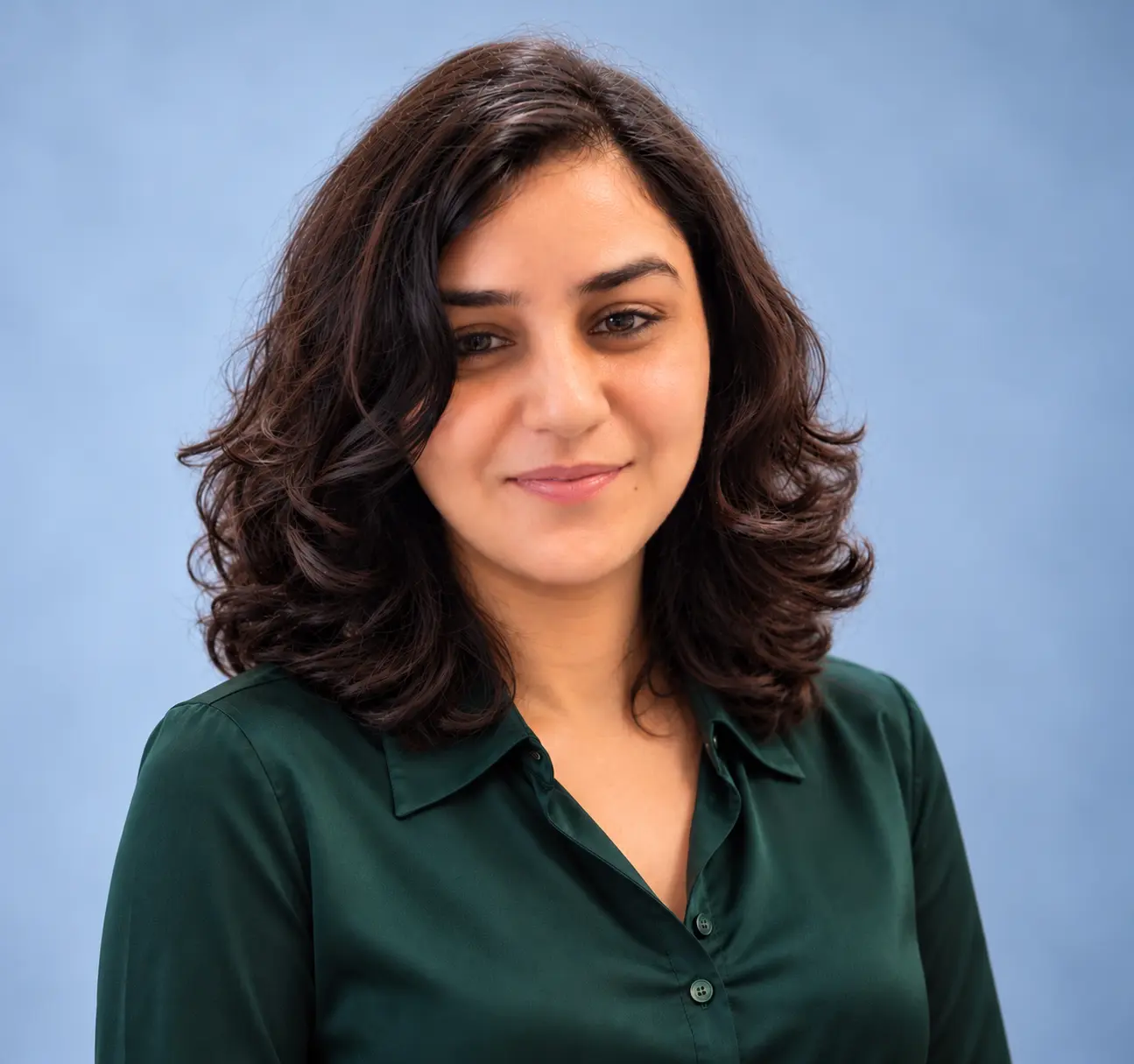
Dr. Shagun Shukla is a molecular biochemist and postdoctoral researcher at Northwestern University, USA, investigating chromatin regulation, genome stability, and neuroepigenetic mechanisms underlying neurodegenerative diseases. Her research bridges molecular biochemistry and disease biology, building on her doctoral training at the National Institute of Immunology, India.
Linkedin: https://www.linkedin.com/in/dr-shagun-shukla/
Career Konnect – BioPatrika
Career as a Postdoctoral Researcher | PhD to Postdoc in Academia
Part 1: General Information
1. Current Position: What is your current job title and a brief description of your role?
I am currently a Postdoctoral Fellow in the Department of Neurology at Feinberg School of Medicine, Northwestern University. My research focuses on understanding molecular and epigenetic mechanisms that contribute to neurodegenerative disease.
I study how changes in transcriptional regulation and genome stability can contribute to disease, with a particular interest in R-loops and their relationship with cellular dysfunction. My work combines molecular biology, protein biochemistry, cell biology, imaging, and epi-genomic approaches.
2. Company: Which company are you currently working for?
I currently work at Feinberg School of Medicine, Northwestern University in Chicago, Illinois. As my position is academic, Northwestern is my research institution rather than a company.
3. Location: In which city and country are you based?
Chicago, Illinois, USA.
Part 2: Career Path and Education
4. Academic Background: What was your PhD specialization? From which university did you obtain your PhD?
I completed my Ph.D. at the National Institute of Immunology, Jawaharlal Nehru University, New Delhi, India.
My doctoral research focused on protein engineering, biochemistry and chromatin biology, particularly the semisynthesis of histones with defined post-translational modifications. I studied how specific histone modifications influence the activity and specificity of enzymes that remove these modifications.
This work gave me a strong foundation in protein chemistry, enzymology, chromatin biology, and epigenetic regulation.
5. Career Path: Could you briefly outline your career path since completing your PhD? What were the key steps and decisions that led you to your current position?
My career has developed around a central interest in understanding how proteins and chromatin regulate genome function, although the biological questions I have worked on have evolved considerably.
During my Ph.D., I focused on histone biochemistry and developed approaches to generate histones carrying defined modifications. This allowed me to study chromatin-modifying enzymes in a controlled biochemical setting.
For my first postdoctoral training, I joined Prof. Blaine Bartholomew’s laboratory at UT MD Anderson Cancer Center, where I moved deeper into the field of chromatin remodeling. My research focused on the INO80 chromatin-remodeling complex and how nucleosome properties, DNA sequence, and associated factors influence chromatin remodeling and thereby contribute to gene regulation. This expanded my experience from purified biochemical systems to mechanistic questions about nucleosome organization and chromatin regulation.
In March 2025, I joined Prof. Puneet Opal’s laboratory in the Department of Neurology at Northwestern University. This represented an important transition in my career because I wanted to take my expertise in chromatin and molecular biology into the context of human disease.
My current research focuses on neurodegenerative disease and neuroepigenetics, including how transcriptional dysregulation, genome instability, and R-loop accumulation may contribute to disease mechanisms.
Looking back, each transition has allowed me to retain my core expertise in molecular biochemistry while asking progressively broader biological questions – from individual histone modifications, to chromatin remodeling, and now to disease-associated changes in genome regulation.
6. Role of PhD: How important was your PhD in securing your current position? Did it provide you with specific skills or knowledge that were essential for your role?
My Ph.D. was fundamental, not only because of the technical expertise I developed but because it taught me how to approach an unanswered scientific question.
Technically, I developed skills in protein purification, biochemical assay development, histone and chromatin biology, molecular biology, and quantitative experimental analysis. However, some of the most valuable skills were less technique-specific: designing appropriate controls, troubleshooting experiments, interpreting unexpected results, reading literature critically, and learning how to distinguish an interesting observation from a reproducible scientific conclusion.
Those skills have remained relevant even as my research questions have changed significantly. A Ph.D. also teaches you to become comfortable with uncertainty. Research rarely progresses exactly as planned, and learning how to reformulate a question when the original hypothesis is not supported has been extremely important throughout my career.
Part 3: Job Role and Responsibilities
7. Daily Responsibilities: Could you describe a typical workday for you? What are your primary responsibilities and tasks?
For a typical day in experimental research, a significant part of my time involves designing and performing experiments, analyzing data, troubleshooting, reading scientific literature, and discussing results and future directions with colleagues.
My current research incorporates several complementary approaches, including molecular and cell biology, microscopy, protein- and nucleic-acid-based assays, and genomic approaches. I also spend considerable time interpreting how results from different experimental systems fit together into a biological mechanism.
As I have progressed in my career, my responsibilities have increasingly moved beyond simply performing experiments. I spend more time thinking about experimental strategy, selecting the right controls, evaluating alternative explanations, integrating different datasets, writing manuscripts and reviews, and helping other researchers troubleshoot scientific problems.
8. Skillset: What key skills (technical and soft) are essential for your role? How did your degree help you develop these skills?
Technical skills: A strong foundation in protein engineering, molecular biology, protein biochemistry, cell biology, microscopy, chromatin biology, and quantitative data analysis is important for my work. Increasingly, researchers also need enough computational literacy to analyze and critically interpret large biological datasets.
Scientific reasoning: In my opinion, this is even more important than mastering individual techniques. A researcher needs to know how to formulate a testable question, design appropriate controls, identify alternative explanations, assess whether a result is reproducible, and decide which experiment should come next.
Soft skills: Scientific communication, collaboration, resilience, adaptability, organization, and the ability to receive and provide constructive criticism are extremely important.
My Ph.D. provided the foundation for all three. Individual experimental techniques change over time, but the ability to learn new methods and think critically remains transferable across research fields.
9. Challenges and Rewards: What are the biggest challenges and rewards of your job?
One of the biggest challenges in research is uncertainty. Experiments fail, hypotheses can be wrong, and projects sometimes move in unexpected directions despite months of work.
Another challenge is that today’s biological questions increasingly require expertise across multiple disciplines. It is impossible for one person to be an expert in everything, so learning how to collaborate and communicate across fields has become essential.
At the same time, this is also what makes research rewarding. There is a particular satisfaction in observing something that is not yet understood, designing experiments to investigate it, and gradually developing a mechanistic explanation. I also enjoy the continuous learning that comes with science. Even after years of research, there are always new technologies, concepts, and biological questions to explore.
10. Work-Life Balance: How do you balance your work and personal life? What strategies do you use to manage stress and maintain a healthy work-life balance?
I think work-life balance in research has to be approached deliberately because scientific work can easily expand to occupy all available time.
I try to distinguish between tasks that genuinely require immediate attention and those that can wait. Planning experiments in advance, defining realistic priorities, and accepting that not everything needs to be completed at once are helpful.
I have also learned that time away from research is important. Rest, family, social activities, and interests outside the laboratory are not separate from being productive – they help maintain the perspective and energy necessary for sustained scientific work.
I do not think I have perfected work-life balance, but I have become much more conscious of its importance as my career has progressed.
Part 4: Future Opportunities
11. Career Progression: What are the potential career paths and opportunities for someone in your position?
One advantage of postdoctoral training is that the skills developed are applicable to many different careers.
The traditional route is toward an independent academic position, such as becoming a principal investigator and developing an independent research program. However, postdoctoral researchers can also transition into biotechnology and pharmaceutical R&D, scientific project management, medical or scientific affairs, technology transfer, intellectual property, scientific communication, regulatory science, consulting, and other science-based roles.
I think it is important for researchers to understand these possibilities relatively early rather than assuming that there is only one successful career trajectory after a Ph.D. The right path depends on what aspects of science motivate an individual – discovering fundamental mechanisms, translating discoveries into products, leading teams, communicating science, developing strategy, or working at the interface between science and policy or business.
12. Industry Trends: What are the current trends and challenges in the biotech industry? How do you see your role evolving in the future?
One of the most interesting developments in biomedical research is the increasing convergence of traditionally separate disciplines. Experimental biology is becoming increasingly integrated with genomics, quantitative imaging, computational biology, large-scale datasets, and artificial intelligence. At the same time, new technologies allow us to study biological processes with a resolution that would have been difficult to imagine even a decade ago.
However, sophisticated technology does not eliminate the need for rigorous biology. Data quality, appropriate experimental controls, reproducibility, and biological validation remain fundamental.
I therefore think the role of scientists will increasingly involve connecting different levels of information rather than specializing exclusively in a single experimental technique. For my own career, I would like to continue building on my background in molecular biochemistry, chromatin biology, and neuroepigenetics while becoming increasingly capable of integrating mechanistic experiments with genomic and computational approaches.
13. Advice for Aspiring Scientists: What advice would you give to early-career researchers who are aspiring to work in the biotech industry?
My first advice would be not to define yourself by a single experimental technique. Techniques change rapidly. The more durable skill is learning how to address complex scientific questions.Build strong fundamentals in your field, but also understand why an experiment is being performed, what assumptions it makes, what controls are necessary, and what alternative explanations could account for the result.
Second, become comfortable learning outside your immediate area of expertise. Modern biomedical science is increasingly interdisciplinary, and familiarity with statistics, computational approaches, data analysis, and emerging technologies can greatly expand your opportunities.
Third, work on communication. Being able to explain a complex scientific problem clearly – to another scientist, a collaborator, an interviewer, or someone outside your field – is an extremely valuable skill.
Finally, do not assume there is only one correct career path after a Ph.D. Explore academia, biotechnology, pharmaceutical research, scientific strategy, communication, policy, intellectual property, and other possibilities before deciding where your strengths and interests fit best.
14. Resources: Are there any resources, networks, or training programs that helped you in your career that you would recommend?
Scientific literature has always been my most important learning resource. Developing the habit of reading papers critically – not only the conclusions but also the experimental design and limitations – is invaluable.
I would also strongly recommend attending seminars and conferences outside one’s immediate research topic. Some of the most useful ideas come from seeing how scientists in other fields approach similar problems.
Professional societies and scientific networks can also be valuable. Organizations and communities in molecular biology, biochemistry, epigenetics, genetics, neuroscience, and related disciplines provide opportunities for scientific exchange, career development, networking, and mentorship.
Finally, mentorship matters enormously. Having conversations with scientists at different career stages can provide perspectives that are difficult to obtain simply by reading career advice online.
Part 5: Salary
15. Salary range (annual) for Freshers
For a new postdoctoral researcher in the United States, approximately $63,000-$65,000 per year is a useful benchmark, although salaries vary by institution, location, funding mechanism, and field.
16. Salary range (annual) for someone with your experience
For an experienced postdoctoral researcher in the United States, approximately $70,000-$77,000 per year is a reasonable benchmark, although compensation varies considerably among universities and funding sources. These figures are best treated as general U.S. academic benchmarks rather than universal salary ranges.