

Exploring Inter-Organ Communication, Mentorship, and Building a Research Career | Dr. Sveta Chakrabarti faculty interview
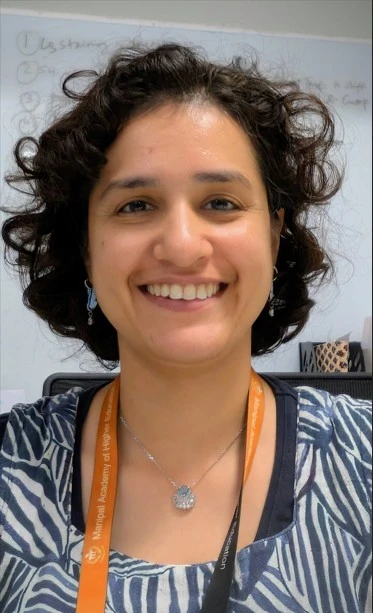
In this edition of Faculty Konnect, we speak with Sveta Chakrabarti, Assistant Professor and Wellcome-DBT Intermediate Fellow at the Manipal Institute of Regenerative Medicine under Manipal Academy of Higher Education, Bengaluru. Dr. Chakrabarti shares her journey from immunology research in Europe to establishing her independent laboratory in India, discusses how scientific curiosity led her into the field of wound biology, and reflects on mentorship, lab leadership, and career development for young researchers.
Dr. Sveta Chakrabarti Faculty Konnect Interview
Could you briefly introduce yourself and your research journey?
I am Dr. Sveta Chakrabarti. I completed my PhD at EPFL, Lausanne, Switzerland and later joined Indian Institute of Science (IISc) Bangalore as an Early Career Fellow in the laboratory of Dr. Sandhya Visweswariah through the Wellcome-DBT India Alliance program. Currently, I am a Wellcome-DBT Intermediate Fellow and independent group leader at the Manipal Institute of Regenerative Medicine (MIRM), Bengaluru.
Our laboratory focuses on understanding inter-organ communication during wounding. We study how tissues detect injury, how blood cells respond, and importantly, how distant organs in the body become aware of the damage and alter their functions accordingly. We are interested in how organisms coordinate systemic responses after injury and how these mechanisms overlap with immunity and inflammation.
From Immunology to Wound Biology
How did your research interests evolve toward wounding and inter-organ communication?
My entry into wound biology was actually somewhat accidental. I was originally trained in immunology and primarily interested in how hosts respond to infections. During some of my experiments, however, I noticed that certain mutants were showing phenotypes even in the “sham control,” which was essentially just the wounding procedure without any pathogen exposure.
That observation made me curious. Why were immune pathways responding simply to tissue damage? This led me to explore how the body reacts not only to pathogens but also to injury and self-derived signals. In many conditions such as allergies, dermatitis, or sterile inflammation, the body reacts to its own internal disturbances rather than external microbes.
That curiosity gradually shifted my focus toward understanding damage responses and sterile inflammation.
Why did you continue working with Drosophila as a model system?
I stayed with flies because of the incredible genetic power of the system. During my PhD, I had already worked extensively with Drosophila, and it became clear that flies are extremely powerful for studying whole-organism responses.
Using flies allows us to study multiple physiological outcomes simultaneously—behavior, survival, fecundity, gut physiology, metabolism—all within the same organism. We can perform experiments at scale and obtain strong statistical power while maintaining relatively low setup costs.
In comparison, moving into mouse models would require significantly more infrastructure and funding, including animal facilities that were not readily available to me. Drosophila provides an elegant balance between complexity and experimental tractability, especially for studying systemic biology.
Connecting Wounding and Immunity
Do you see your work eventually reconnecting with classical immunology?
Absolutely. Injury and immunity are deeply interconnected.
When infections occur, the body experiences both tissue damage and pathogen exposure simultaneously. These pathways constantly communicate with each other. Even in vaccines, the antigen alone is not enough—you need adjuvants. The innate immune system essentially “trains” or activates the adaptive immune system.
By understanding sterile inflammatory pathways independently, we can later ask more sophisticated questions: What changes when both damage and infection signals are activated together? What happens if one pathway is blocked? How does adaptive immunity change if sterile inflammatory pathways are altered?
So yes, I think the connection between wound biology and immunity will become increasingly important in the future.
Choosing MIRM and Establishing an Independent Lab
What led you to choose MIRM, MAHE as your host institution?
My transition to MIRM was shaped by both scientific fit and professional networking.
I interviewed at institutions like IISc and NCBS during the COVID period, but circumstances and timing did not align perfectly. Since I needed to remain in Bengaluru for personal reasons, I focused on opportunities within the city.
At that stage, I realized that securing independent funding would be critical for starting my lab. I began developing my fellowship proposal while at IISc. Around that time, an immunologist colleague, Dr. Sudha Kumari, connected me to researchers at MIRM, including Dr. Sangeeta and later Dr. Jyoti, who was then becoming Dean.
Once I presented my research proposal and seminar at MIRM, it became clear that the institute would provide the flexibility and support I needed as an early-stage PI. Importantly, they were supportive about student recruitment and building an independent research group, which can sometimes be difficult for fellows in certain institutions.
In many ways, networking played a crucial role in helping me discover the right institutional environment.
Building a Research Group
How do PhD admissions and project structures work at MAHE?
At MAHE, students can join through multiple pathways.
One route is through institutional fellowships such as the TMA-PAI fellowship program. Students clear an entrance examination, indicate their institute preferences, and faculty members interview candidates before selecting students into their labs.
The second route is through national fellowships such as CSIR or DBT fellowships. In these cases, students apply independently and go through departmental interviews.
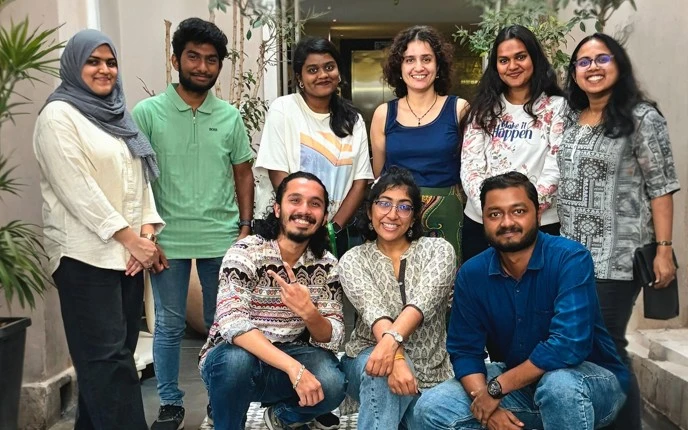
Currently, I have four PhD students supported through different mechanisms—including institutional fellowships, DBT fellowships, and grant-supported positions. Some students also transition from MSc projects into PhD programs within the lab.
This flexibility helps build a diverse research group and allows students from different backgrounds to enter research.
Transitioning from Researcher to Mentor
How has the transition from bench scientist to mentor and group leader been?
It has definitely been a major transition.
Right now, I still spend significant time at the bench because many techniques need to be directly transferred from me to the students. In the first few years of establishing a lab, the PI often remains heavily involved experimentally.
At the same time, I now manage multiple responsibilities—teaching, grants, papers, student mentorship, and group dynamics. Earlier, during my postdoctoral and early-career fellowship stages, I mainly focused on research and perhaps supervised one or two trainees. Running a lab is completely different.
One experience that significantly helped me during this transition was an EMBO leadership training program for new PIs. It introduced concepts of team management, communication styles, and adapting mentorship approaches to different personalities.
Science is not just about experiments—it is also about people working together effectively. Understanding interpersonal dynamics is equally important in running a successful lab.
The Importance of Mentorship
Who were some of the mentors who influenced your journey?
I have been fortunate to receive mentorship from several people throughout my career.
My PhD supervisor has remained an important scientific mentor and continues to support my work. Through the Wellcome-DBT India Alliance program, I also formally worked with Dr. Irene Miguel-Aliaga, who continues to mentor me scientifically and professionally.
These mentorship relationships were valuable not only scientifically but also in helping navigate career transitions, balancing family responsibilities, understanding institutional systems, and learning how to establish an independent research identity.
I also received tremendous informal support from colleagues at IISc and from the Drosophila research community in India. Many researchers were generous with reagents, collaborations, and guidance. Those networks helped me integrate into the Indian scientific ecosystem after returning from Europe.
Supporting Young Researchers and Career Development
What changes would you like to see in the Indian research ecosystem?
One major gap I feel strongly about is the lack of structured mentorship for young principal investigators in India.
In many international systems, junior faculty are formally assigned senior mentors who help review grants, advise on student management, and support career development. In India, many young PIs are expected to simply “figure it out” independently.
Institutions invest significant resources into hiring faculty, but mentorship structures are often missing. Strong researchers may struggle simply because they were never trained in leadership or lab management.
I believe institutionalized mentorship programs and leadership training could significantly improve the success and well-being of early-career scientists in India.
Career Guidance for Students
How do you guide students regarding career development?
I try to ensure students understand that research careers are not limited to academia alone.
For MSc students, we facilitate exposure to industry through institutional collaborations and internships with companies such as Biocon and others. Students can explore both academic and industrial environments before making long-term decisions.
I also encourage students to think carefully before committing to a PhD. Academia is highly competitive, and students should pursue research only if they genuinely enjoy the process.
For PhD students, I strongly encourage conference participation, poster presentations, and networking opportunities. Many postdoctoral positions emerge through scientific interactions at meetings. Exposure to the broader scientific community is extremely important.
At the same time, I also emphasize that careers in science communication, industry, policy, and related sectors are equally valid and exciting pathways.
Opportunities in the Lab
Are there opportunities for students or postdocs interested in joining your lab?
At present, I am not actively hiring PhD students immediately, but students with national fellowships who are genuinely interested in immunology, wound biology, and inter-organ communication are always welcome to reach out.
For postdoctoral researchers, I am open to jointly developing fellowship applications such as DBT-RA, Kothari Fellowship, NPDF, or institutional postdoctoral fellowships at MAHE.
For postdocs specifically, I encourage applicants to bring their own scientific ideas and project directions so we can collaboratively build competitive proposals together.
Dr. Sveta Chakrabarti’s journey reflects the evolving landscape of modern biology—where immunology, tissue repair, and systemic physiology intersect. Her emphasis on mentorship, collaboration, and whole-organism thinking highlights the importance of building not only strong science, but also supportive scientific communities.
As Indian research ecosystems continue to grow, voices like hers remind us that nurturing people is just as important as nurturing ideas.
Lab Website: https://svetachakrabarti.wixsite.com/mysite
Email: sveta.chakrabarti@manipal.edu
New Book Launched – Molecules, Mentors & Mindsets: Building Indian Biopharma
Buy your copy today: https://biopatrika.com/science-society/book-molecules-mentors-mindsets-building-indian-biopharma-biocon/
Book Launch: Molecules, Mentors & Mindsets: Building Indian Biopharma | Biocon Focus