



Peers Over the Past: Group Living Alters Mosquito Behaviour
Research summary: Our recent study shows that group living can modulate the effects of early-life experiences. In Aedes aegypti, individuals exposed to predation risk as larvae exhibit altered behaviour as pupae (as shown in our previous study), but only when alone. When in groups, these behavioural carryover effects disappear, suggesting that the presence of peers can mask or suppress the influence of past risk at the individual level.
Researcher Spotlight
Kanika Rawat is a Research Associate at the National Centre for Biological Sciences (NCBS), Bengaluru, where she develops agent-based models to predict zoonotic disease spillovers. She completed her PhD at the Indian Institute of Science (IISc), studying the behavioural ecology of Aedes aegypti mosquitoes, with a particular focus on the understudied pupal stage. Outside research, she enjoys playing ultimate frisbee, badminton, and dancing.
Lab website https://sites.google.com/view/kilab
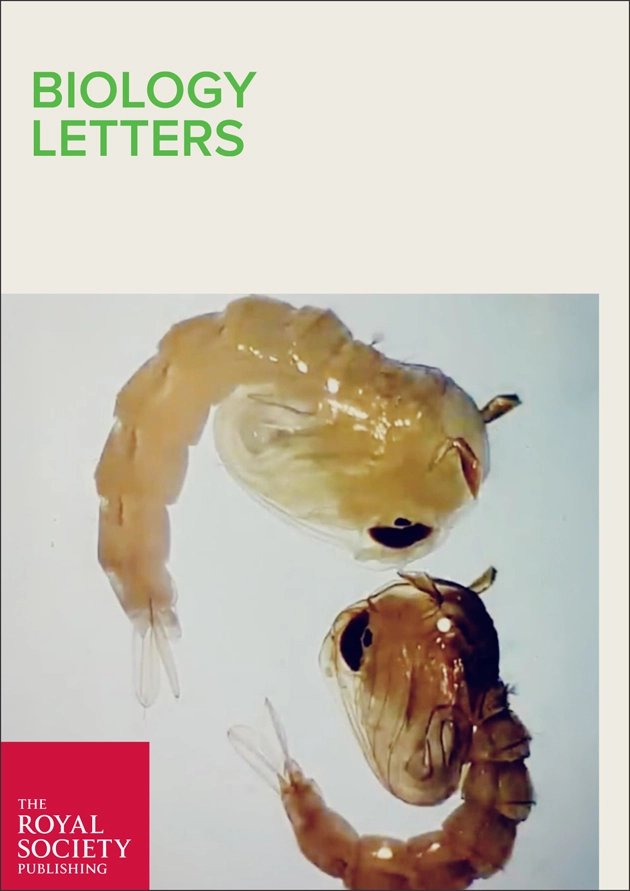
Past Experiences and Present Context
Animals often carry past experiences into later stages of life. For instance, individuals exposed to predation risk early in life may behave more cautiously in their current environment, even in the absence of an immediate threat. These “behavioural carryovers” can play an important role in survival. But what happens when individuals are not alone? Can the presence of others change how past experiences shape behaviour?
Safety in Numbers?
In our recent study, we explored how group living interacts with early-life experience in shaping behaviour. We used the mosquito Aedes aegypti, a species with a complex life cycle that includes aquatic larval and pupal stages, to investigate this question.
Previous work from our lab showed that individuals exposed to predation risk during the larval stage behave differently as pupae compared to naive individuals, reflecting behavioural carryover. However, that study examined individuals in isolation.
To test whether this effect persists in a group setting, we compared the behaviour of pupae when alone versus when in groups. This is relevant because mosquito pupae are rarely found alone in nature, and grouping may itself provide protection against threats.
Peers Over the Past: What We Found
Our findings reveal a striking pattern: when risk-experienced individuals are placed in groups, the behavioural carryover disappears.
Specifically, for key behaviours such as diving responses, space-use patterns, and activity levels, risk-experienced individuals behaved similarly to risk-naive individuals when in groups. In other words, the group-living context masks the influence of prior risk experience at the individual level.
Why Does This Matter?
While early-life conditions can leave lasting effects, our study shows that these effects may only be expressed under certain contexts. This is particularly striking in the pupal stage, an understudied, short-lived, non-feeding phase lasting just 2–3 days, whose primary function is to transition into adulthood. Even in this brief and constrained stage, behavioural responses remain flexible and sensitive to the surrounding environment.
Underlying cost-benefit trade-offs likely shape these outcomes, although the precise mechanisms remain unclear. Investigating these would be particularly fascinating given the extensive physiological remodelling that occurs during this life stage.
As the environment continues to change, understanding how past experiences and present contexts interact will be key to predicting how organisms respond and adapt.
Reference:
Kanika Rawat and Kavita Isvaran, Peers over the past: prior predation-risk experience does not dictate antipredator responses of individuals in groups, Biology Letters (2026). https://doi.org/10.1098/rsbl.2025.0806