


LARC-GAPs: emerging whole-sporozoite vaccines for high-level sterile protection against malaria
Research Summary: Genetically attenuated parasites (GAPs), particularly late liver-stage-arresting GAPs, represent promising next-generation malaria vaccines. Their ability to induce broader immune responses and potentially stronger protection highlights their translational potential for malaria prevention.
Researcher Spotlight
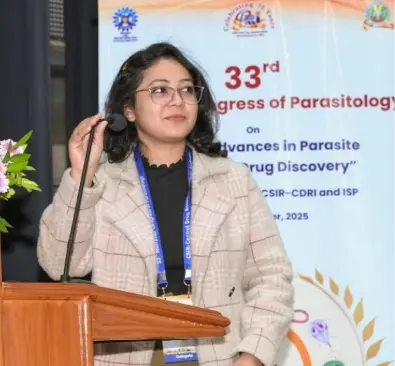
Plabita Paul is a PhD researcher at CSIR-CDRI, Lucknow, working on malaria parasite biology and genetically attenuated parasites, with a focus on developing next-generation malaria vaccines.
Social media (link)- https://www.facebook.com/share/1dac2EiKn4/
Linkedin- https://www.linkedin.com/in/plabita-paul-978779392?
Twitter- https://twitter.com/DrMishraLab
Instagram-https://www.instagram.com/plabita.paul
Lab PI name: Dr. Satish Mishra
University: CSIR-CDRI, Lucknow.
Lab social media: https://www.instagram.com/phd_resource/
What was the core problem you aimed to solve with this research?
Currently available malaria vaccines, including RTS,S/AS01 and R21/Matrix-M, have marked an important advancement in malaria prevention; however, they offer only partial protection, which varies across populations and wanes over time. Their limited efficacy, particularly in preventing infection and providing long-term protection, highlights the need for more effective, broadly protective, and durable next-generation malaria vaccines.
How did you go about solving this problem?
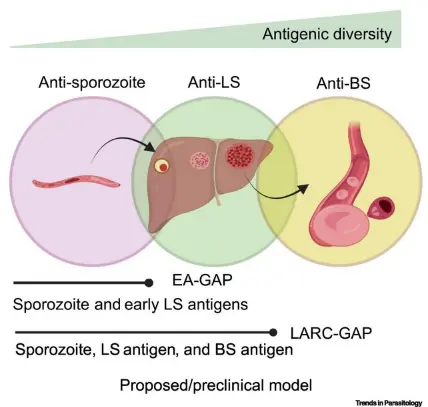
We addressed this problem by reviewing the development and progress of genetically attenuated parasite (GAP) vaccines, with particular focus on late liver-stage-arresting LARC-GAPs. We evaluated their mechanisms of attenuation, ability to induce broad protective immune responses, efficacy, and recent clinical outcomes to assess their potential as next-generation malaria vaccines.
“Our advanced mosquito-rearing facilities and dedicated research team provide a strong foundation for developing promising next-generation malaria vaccines.” — Dr. Satish Mishra
How would you explain your research outcomes (Key findings) to the non-scientific community?
Our research highlights the potential of genetically weakened malaria parasites to serve as effective vaccines by stimulating broader and potentially longer-lasting immune protection. Importantly, our laboratory has successfully generated two LARC-GAP candidates, including SCD/SCOT double-knockout (KO) and MCAT-KO parasites, which represent promising candidates for future malaria vaccine development.
What are the potential implications of your findings for the field and society?
In the long term, these approaches could help reduce malaria transmission, disease burden, and associated mortality, particularly in malaria-endemic regions, benefiting global public health.
What was the exciting moment during your research? It was rewarding to see how advances in genetic manipulation could contribute to addressing the limitations of existing malaria vaccines and open new possibilities for future research.
Paper reference https://doi.org/10.1016/j.pt.2026.09.013