

Biosimilars Market Report
𝗗𝗼𝗲𝘀 𝘁𝗵𝗲 $𝟭𝟱𝗕 𝗠𝗮𝗿𝗸𝗲𝘁 𝗧𝗮𝗴 𝗠𝗮𝗸𝗲 𝗘𝗻𝗵𝗲𝗿𝘁𝘂 𝗕𝗶𝗼𝘀𝗶𝗺𝗶𝗹𝗮𝗿𝘀 𝗪𝗼𝗿𝘁𝗵 𝗮 𝗦𝗵𝗼𝘁 𝗶𝗻 𝘁𝗵𝗲 𝗗𝗮𝗿𝗸?
New Biosimilar Spotlight: June 29, 2026
𝗧𝗵𝗲 𝗢𝗽𝗽𝗼𝗿𝘁𝘂𝗻𝗶𝘁𝘆:
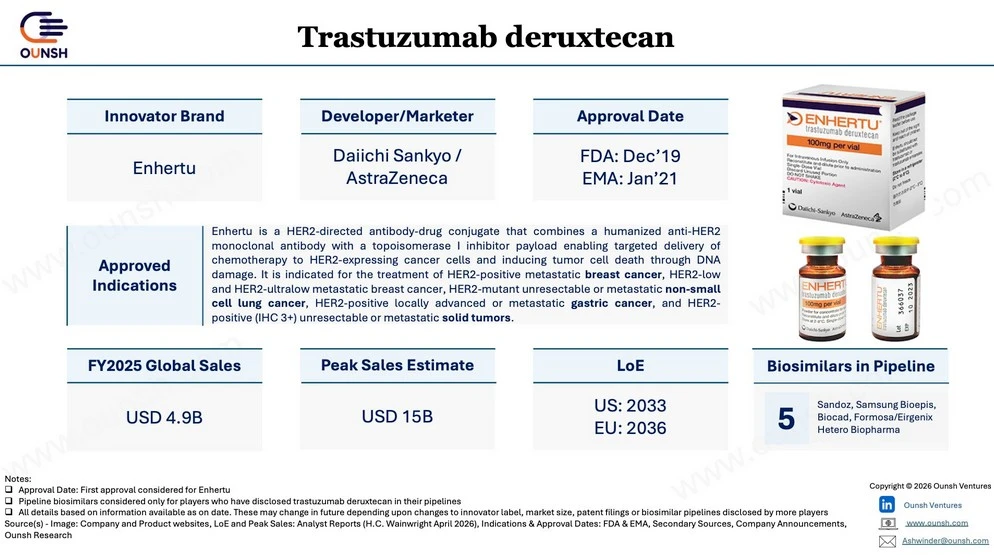
Enhertu (Trastuzumab Deruxtecan): Nextgen Breast Cancer ADC with significant upgrades over Kadcyla (Trastuzumab Emtansine).
Discovered by Daiichi Sankyo & Co-Developed with AstraZeneca.
💰~$5B sales in 2025; Peak Sales projected at ~$15B driven by indication expansions & early-stage therapy approvals.
𝗧𝗵𝗲 𝗖𝗼𝗺𝗽𝗲𝘁𝗶𝘁𝗶𝗼𝗻: 𝗘𝗮𝗿𝗹𝘆 𝗕𝘂𝘁 𝗧𝗵𝗶𝗻
Only 5 players have disclosed Enhertu biosimilars in their pipelines, of which 3 have demonstrated global dev capability.
-None reached clinical trials yet.
-Many others have listed ADCs generically without naming specific products.
-Core technical barrier: ADCs have complex molecular architecture & developers must perfectly engineer the antibody-payload (deruxtecan) connection ensuring it stays intact in the bloodstream & releases precisely at tumor site.
-Many biosimilar players may not have access to linker & conjugation tech to crack this.
𝗧𝗵𝗲 𝗥𝗼𝘂𝘁𝗲 𝘁𝗼 𝗠𝗮𝗿𝗸𝗲𝘁: 𝗨𝗻𝗰𝗵𝗮𝗿𝘁𝗲𝗱 𝗧𝗲𝗿𝗿𝗶𝘁𝗼𝗿𝘆
No ADC biosimilar approved in any advanced market yet.
Trastuzumab Emtansine (2027 LoE) could’ve been the first but at $2.5B peak sales it was likely deprioritised against higher-value Immunology, Ophthalmology & Oncology targets with clear development pathways.
Advanced regulators haven’t opined on Phase 3 waivers; Seems the first wave of ADC bios will require extensive characterization + Phase 3 trials including data for:
-Drug-to-antibody ratio + distribution
-Conjugation site mapping
-Linker stability under stress
-Aggregation profile
-Payload integrity & residual analysis
𝗧𝗵𝗲 𝗣𝗮𝘁𝗲𝗻𝘁 𝗟𝗮𝗻𝗱𝗺𝗶𝗻𝗲:
Earliest LoE (base patents) US: 2033 | EU: 2036
⚠️ BPCIA mechanics look same on paper, but ADC bios litigation is likely more complex with simultaneous assertions across payload, linker & antibody claims, more patents & novel infringement questions with zero case law.
🥊 A preview: It took 6 years for courts to resolve Seagen’s suit on Daiichi alleging Enhertu infringed its linker patent.
𝗧𝗵𝗲 𝗜𝗻𝗻𝗼𝘃𝗮𝘁𝗼𝗿 𝗜𝘀𝗻’𝘁 𝗪𝗮𝗶𝘁𝗶𝗻𝗴:
In 2024, Daiichi licensed Alteogen tech to develop SubQ Enhertu; a lifecycle move to sustain market dominance post IV LoE.
𝗧𝗵𝗲 𝗕𝗼𝘁𝘁𝗼𝗺 𝗟𝗶𝗻𝗲:
The opportunity is massive.
But this is a uniquely inverted case where route-to-market is more uncertain than the adoption-curve once you get there.
When will the market finally open for biosimilars is tough to call with confidence today.
But bios players with proven tech depth & IP expertise should NOT sit this one out as competitors may face delays and early movers who crack the dev & litigation challenges could land in a semi-exclusive window.
💰 Is $15B enough to justify the high tech & litigation risk or is this a race only few technically elite can run?
📩 Get in touch for strategic analysis
Market Report by: Ashwinder Singh Chowdhary
Website: https://www.ounsh.com/
Linkedin: https://www.linkedin.com/company/ounsh/
Dupixent Biosimilars: $30 Billion Opportunity or High-Risk Investment? | Market Report