


Tuberculosis loves a sweet tooth and an iron buffet
Research Summary: Chronic hyperglycemia promotes intracellular iron accumulation and enhances iron uptake in macrophages, increasing iron availability to Mycobacterium tuberculosis and susceptibility to infection. Iron chelation reduced bacterial burden, highlighting therapeutic potential.
Researcher Spotlight
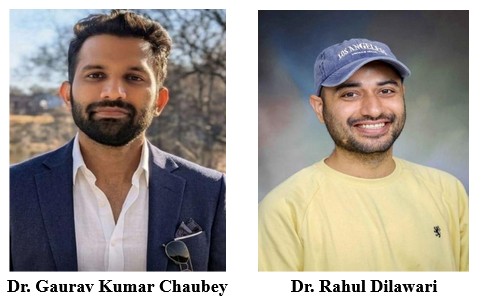
First authors: Gaurav Kumar Chaubey and Rahul Dilawari
Dr. Gaurav Kumar Chaubey and Dr. Rahul Dilawari earned their Ph.D. degrees under the mentorship of Dr. Manoj Raje at CSIR-Institute of Microbial Technology, Chandigarh. Dr. Chaubey investigated the role of iron in diabetes-associated tuberculosis, while Dr. Dilawari studied macrophage iron carrier pathways. Both are now postdoctoral researchers at Washington University in St. Louis and the University of Texas Medical Branch, respectively.
Gaurav Kumar Chaubey
Linkdin: linkedin.com/in/gaurav-kumar-chaubey-305379102
Twitter: @gchaubey93
Rahul Dilawari
Linkdin: https://www.linkedin.com/in/r-d-97840a52/
Lab: Dr. Manoj Raje, CSIR-Institute of Microbial Technology
What was the core problem you aimed to solve with this research?
The core problem we aimed to solve was understanding why people with diabetes are more susceptible to tuberculosis and often experience worse disease outcomes. While the association between diabetes and Tuberculosis is well recognized, the underlying biological mechanisms remain poorly understood. We investigated whether chronic hyperglycemia alters iron metabolism in macrophages, creating an iron-rich environment that benefits Mycobacterium tuberculosis. Our findings reveal that high glucose-driven iron accumulation enhances bacterial survival and suggest that targeting iron availability could be a promising strategy to improve Tuberculosis outcomes in diabetic individuals.
How did you go about solving this problem?
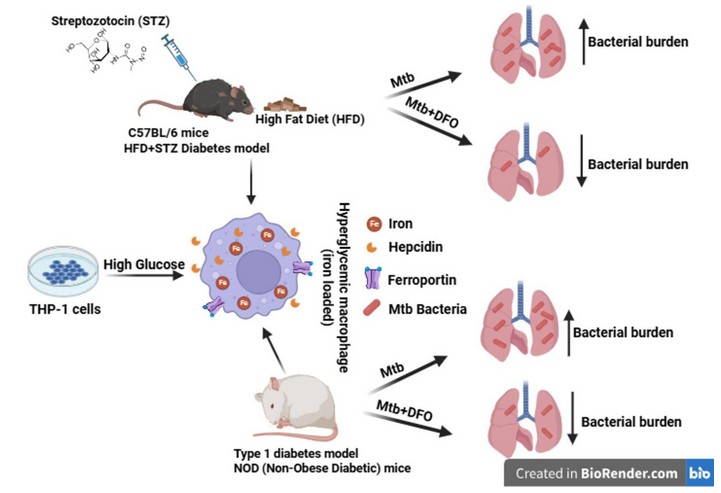
To address this problem, we combined cell culture and animal models of diabetes and tuberculosis. We cultured THP-1-derived macrophages under high-glucose conditions and analyzed macrophages isolated from diabetic mice to investigate changes in intracellular iron levels, iron-regulatory mechanisms, and the growth of Mycobacterium tuberculosis. We then assessed iron content within Mycobacterium tuberculosis during infection and tested whether reducing iron availability through iron chelation could limit bacterial survival. Finally, we validated our findings in diabetic mice infected with M. tuberculosis, where iron chelation significantly reduced bacterial burden in the lungs and spleen.
“This study identifies a link between chronic hyperglycemia and iron metabolism, explaining increased tuberculosis susceptibility in diabetes and supporting iron-targeted therapies.” – Dr. Manoj Raje
How would you explain your research outcomes (Key findings) to the non-scientific community?
Tuberculosis (TB) and diabetes are two major global health challenges, and people living with diabetes are known to be more vulnerable to TB. However, the reason behind this increased risk has remained unclear. Our research shows that diabetes affects more than just blood glucose levels-it also disrupts how immune cells regulate and handle iron. Mycobacteria absolutely love iron for their growth and survival.
Normally, immune cells try to limit iron availability to prevent bacteria from using it for growth. We found that under diabetic conditions, these cells accumulate excess iron and increase the expression of proteins that bring iron into the cell. Unfortunately, TB bacteria can take advantage of this iron-rich environment to survive and multiply more effectively.
A useful way to think about it is that excess iron acts like an additional food source for the bacteria. Importantly, when we reduced iron availability using iron-chelating treatment, the bacterial burden decreased significantly. These findings help explain why diabetes increases susceptibility to TB and suggest that targeting iron metabolism could improve future TB treatments.
What are the potential implications of your findings for the field and society?
Our findings have important implications for both tuberculosis research and public health, especially in the context of the growing diabetes epidemic. We show that diabetes is not only a metabolic disorder but also reshapes immune cell biology in a way that unintentionally favors Mycobacterium tuberculosis by increasing iron availability. This helps explain why individuals with diabetes are at higher risk of developing severe TB.
From a scientific perspective, this work shifts attention toward iron metabolism as a key link between metabolic disease and infection, opening new avenues for research into host-pathogen interactions. It also suggests that controlling iron levels could be an effective strategy to support existing TB therapies.
From a societal perspective, our results highlight the urgent need for integrated management of diabetes and infectious diseases. Iron-targeting approaches, such as iron chelation, could potentially serve as adjunct therapies to reduce TB burden in diabetic populations and improve treatment outcomes globally.
What was the exciting moment during your research?
One of the most exciting moments during our research was when we first observed a clear link between high glucose conditions and increased intracellular iron in macrophages. Seeing that both THP-1-derived macrophages and diabetic mouse macrophages showed consistent iron accumulation was a turning point, as it immediately suggested that diabetes could be reshaping the intracellular environment in a way that favors Mycobacterium tuberculosis.
Another key moment was when iron chelation significantly reduced bacterial burden in infected diabetic mice. That result strongly validated our hypothesis and made the biological connection feel very real, not just theoretical, confirming we were uncovering a meaningful mechanism.
Paper Reference:
Chaubey, G.K., Dilawari, R., Modanwal, R., Talukdar, S., Dhiman, A., Patidar, A., Chaudhary, S., Sindhu, A., Kumar, A., Raje, C.I. and Raje, M., 2026. Chronic hyperglycemia induces macrophage iron accumulation and promotes Mycobacterium tuberculosis virulence. iScience, 29(6).