


ORF3a-mediated host cellular damage and inflammation: A hidden driver of Delta virulence
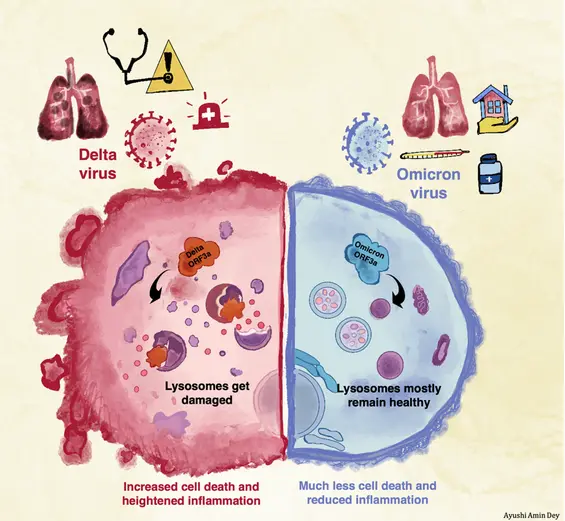
Research Summary: The study reveals the molecular basis for why the SARS-CoV-2 Delta variant emerged to be more pathogenic than other VOCs (variants of concern). In particular, Delta-specific mutations in ORF3a promote lysosomal damage-induced cell death activation indicating a critical cellular mechanism underlying the variant-associated pathogenicity.
Researcher Spotlight
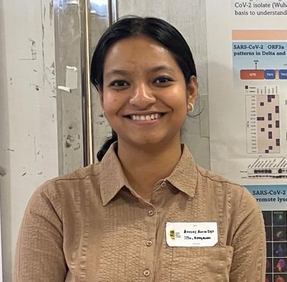
Ayushi Amin Dey is a graduate student and Hindustan Unilever Limited Women in STEM fellow in Dr. Kesavardana Sannula’s group at the Department of Biochemistry in the Indian Institute of Science (IISc), Bengaluru. She pursued an Integrated MSc. In Biotechnology from St. Xavier’s College, Kolkata. Her current research focuses on how viral evolutionary signatures dictate pathogenic potential of different variants.
LinkedIn: https://www.linkedin.com/in/ayushi-amin-dey-a15752439/
Lab PI name: Dr. Kesavardana Sannula
University: Indian Institute of Science, Bangalore
Lab social media: linkedin.com/in/s-kesavardhana-830243129; https://x.com/keshu_VRimmCh
What was the core problem you aimed to solve with this research?
Viruses continue to acquire mutations, evolving on par with host cells. This evolution not only alters the transmissibility of the viruses but also regulates their interactions with host cells. This ultimately modulates host immune responses and determines the outcome of disease severity depending on the acquired mutations. The emergence of multiple SARS-CoV-2 variants provides a striking example of this process. Despite the emergence of several VOCs, Delta turned out to be distinctive owing to the heightened pathogenicity and the ability to cause severe disease. The Delta wave led to the complete collapse of the healthcare systems and contributed to high mortality globally. However, the precise molecular signatures that led to the high pathogenicity of the Delta variant, remained largely unknown. Our study identified ORF3a as an important determinant of Delta-associated pathogenicity. In fact, through this study, we investigated how evolutionary changes acquired by ORF3a of different SARS-CoV-2 variants contributed to differences in pathogenicities and disease outcomes.
How did you go about solving this problem?
The research in our lab is focused on studying how virus evolution shapes interactions with host cells, particularly decoding the details of virus-induced cell death activation. We aimed to understand the molecular mechanisms underlying the heightened pathogenicity of the Delta by identifying ORF3a as a determinant.
We used an unbiased approach of screening amino-acid sequences of all the SARS-CoV-2 proteins across the VOCs. This approach helped us establish a unique subset of mutations in the Delta virus in comparison to the other VOCs and identified ORF3a as a protein with unique mutational patterns. We also used structural analyses to understand the impact of the Delta-specific mutations on ORF3a structure. Finally, we sought to understand how these sequence and structural variations translate to functional impacts on host responses. Using state-of-the-art evolutionary, structural and functional analyses we decoded how Delta-specific mutations in ORF3a fundamentally altered the virus-host interactions.
“We have a lingering interest in revealing specific molecular cues that will help predict pathogenic potential of viruses. What piqued our curiosity is that although Delta specific mutations in ORF3a did not affect viral titers, they caused enhanced lysosomal damage and activated multi-modal cell death, providing insights into mechanisms underlying Delta-associated pathogenicity.” – Dr. Kesavardana Sannula
How would you explain your research outcomes (Key findings) to the non-scientific
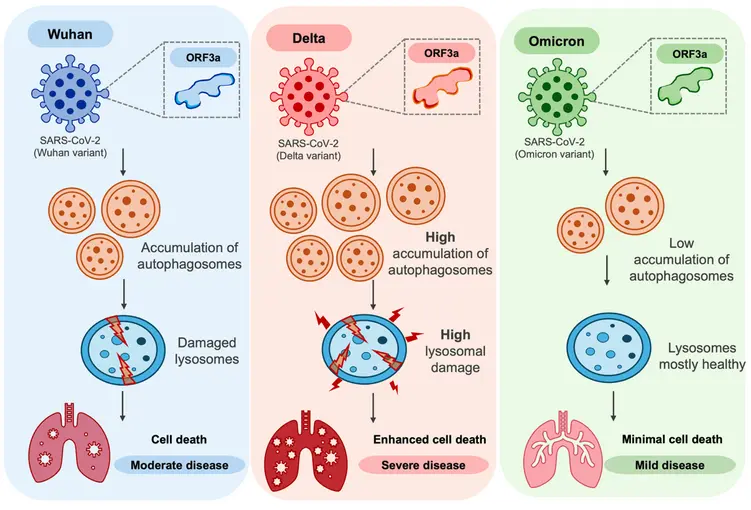
Respiratory viruses, like SARS-CoV-2, continuously evolve due to their adaptations to sustain and transmit among humans. This raises a need to predict the pathogenic potential of new VOCs to aim for pandemic preparedness. The Delta variant of SARS-CoV-2 showed heightened pathogenicity and led to global mortality compared to widespread VOCs like Omicron. However, the underlying molecular mechanisms of this enhanced pathogenicity remained unknown. Our study identifies the SARS-CoV-2 ORF3a protein as one of the determining factors that could help explain the differences in VOC. We found that, unlike ORF3a from the ancestral Wuhan strain or the Omicron variant, Delta ORF3a selectively targets and damages lysosomes (the cellular compartments that are responsible for degradation, recycling and maintaining cellular homeostasis). This lysosomal disruption triggers cell death pathways, including apoptosis and necroptosis, which contributed to tissue damage during infection.
Interestingly, Delta-specific mutations in ORF3a only have a minimal effect on viral replication. These findings demonstrate that the exceptional pathogenicity of the Delta variant was not simply a consequence of increased viral spread. Instead, Delta evolved mutations that effectively disrupted cellular health and led to enhanced cell death. Delta-specific mutations promoted stable molecular assemblies of ORF3a. These structural changes possibly led Delta ORF3a to associate with and damage lysosomes. Together, our findings established a mechanistic link between viral evolution and disease severity.
What are the potential implications of your findings for the field and society?
Our work attempts to shed light on the clues to predict the pathogenic CoVs that have not infected humans so far, thus contributing to pandemic preparedness. We establish a critical mechanism underlying the high pathogenicity and high mortality rates associated with the SARS-CoV-2 Delta variant. Importantly, our study extends beyond explaining the biology of a single SARS-CoV-2 variant. It provides a conceptual framework for understanding how naturally acquired viral mutations can selectively enhance pathogenicity without necessarily increasing viral replication. By identifying ORF3a as a molecular determinant of virulence, our study highlights a strategy for surveillance that goes beyond tracking mutations solely by frequency or transmissibility. Instead, monitoring mutations that disrupt critical host pathways, such as lysosomal homeostasis and inflammatory cell death, could enable earlier identification of newly emerging variants with an increased potential to cause severe disease. More broadly, these findings establish a platform for predicting the pathogenic potential of future SARS-CoV-2 variants and other emerging zoonotic viruses and identify lysosomal dysfunction and inflammatory cell death as promising therapeutic targets to limit severe viral disease.
What was the exciting moment during your research?
Since we wanted to understand the molecular mechanisms underlying the pathogenic potential of Delta, we examined all the proteins of SARS-CoV-2 VOCs to identify proteins with unique Delta-specific mutations. We were quite excited to identify a few SARS-CoV-2 proteins with unique mutational patterns associated with the Delta variant. In fact, when we went on to perform phylogenetic analysis with orf3a gene sequences, we observed that all the pathogenic variants grouped together in the phylogenetic tree in contrast to the whole genome tree. One of the most fascinating aspects of the study was when we observed that Delta-specific sequence variations in ORF3a led to functional differences in lysosomal damage. The Delta mutations in ORF3a led to robust lysosomal damage, which promoted cell death activation in striking contrast to the Omicron-specific mutations. With structural experiments, we were able to make sense of the possible mechanism through which ORF3a Delta mutants enhance lysosomal damage. This was my favourite part of the journey.
Paper reference: Dey, A.A., Mishra, S., Ashireddygari, V.R. et al. SARS-CoV-2 Delta variant-specific ORF3a mutations destabilize lysosomal homeostasis to trigger lysosomal damage-mediated cell death. Commun Biol 9, 1152 (2026). https://doi.org/10.1038/s42003-026-10801-z